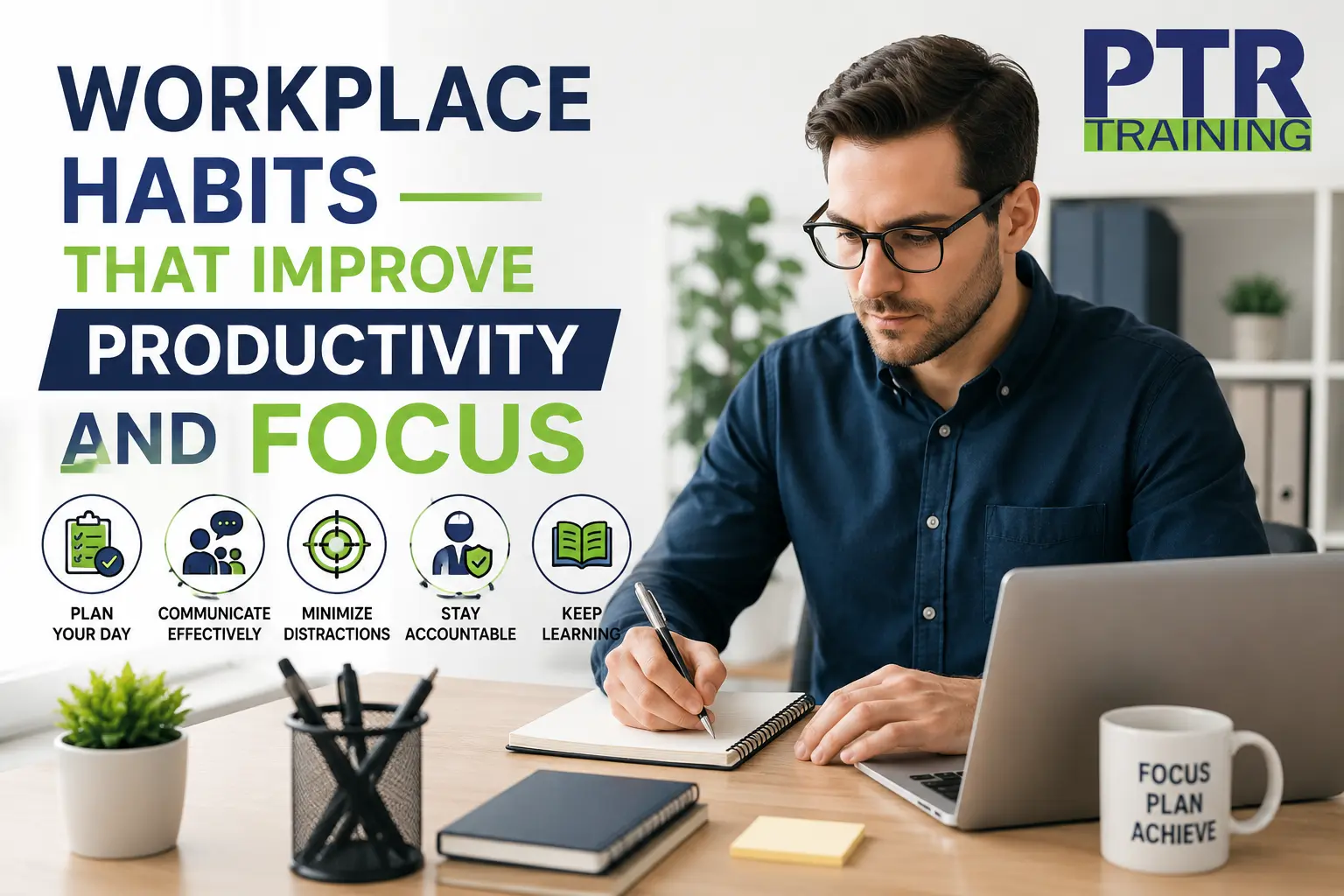
Workplace productivity is not only about working harder. It is about building the right habits that help you stay focused, organized, and motivated every day.
In today’s fast-moving work culture, small daily actions can have a major impact on performance, teamwork, and career growth. Whether you work in an office, remotely, or in a hybrid setup, developing strong workplace habits can help you achieve more with less stress.
Employee engagement remains a major workplace challenge. Gallup reports that only 20% of employees globally feel engaged at work, highlighting the growing need for healthier workplace habits.
That is why organizations are focusing more on positive workplace behaviors that improve efficiency, communication, and accountability.
Why Workplace Habits Matter?
Your habits shape your work performance more than occasional bursts of motivation.
Strong workplace habits help you:
- Manage workloads efficiently
- Improve collaboration with coworkers
- Reduce unnecessary stress
- Meet deadlines consistently
- Maintain better work-life balance
- Increase long-term career growth
On the other hand, poor workplace habits can lead to missed deadlines, communication gaps, burnout, and lower team morale. The good news is that workplace habits can be developed over time with consistency and awareness.
7 Productive Workplace Habits Every Professional Should Develop
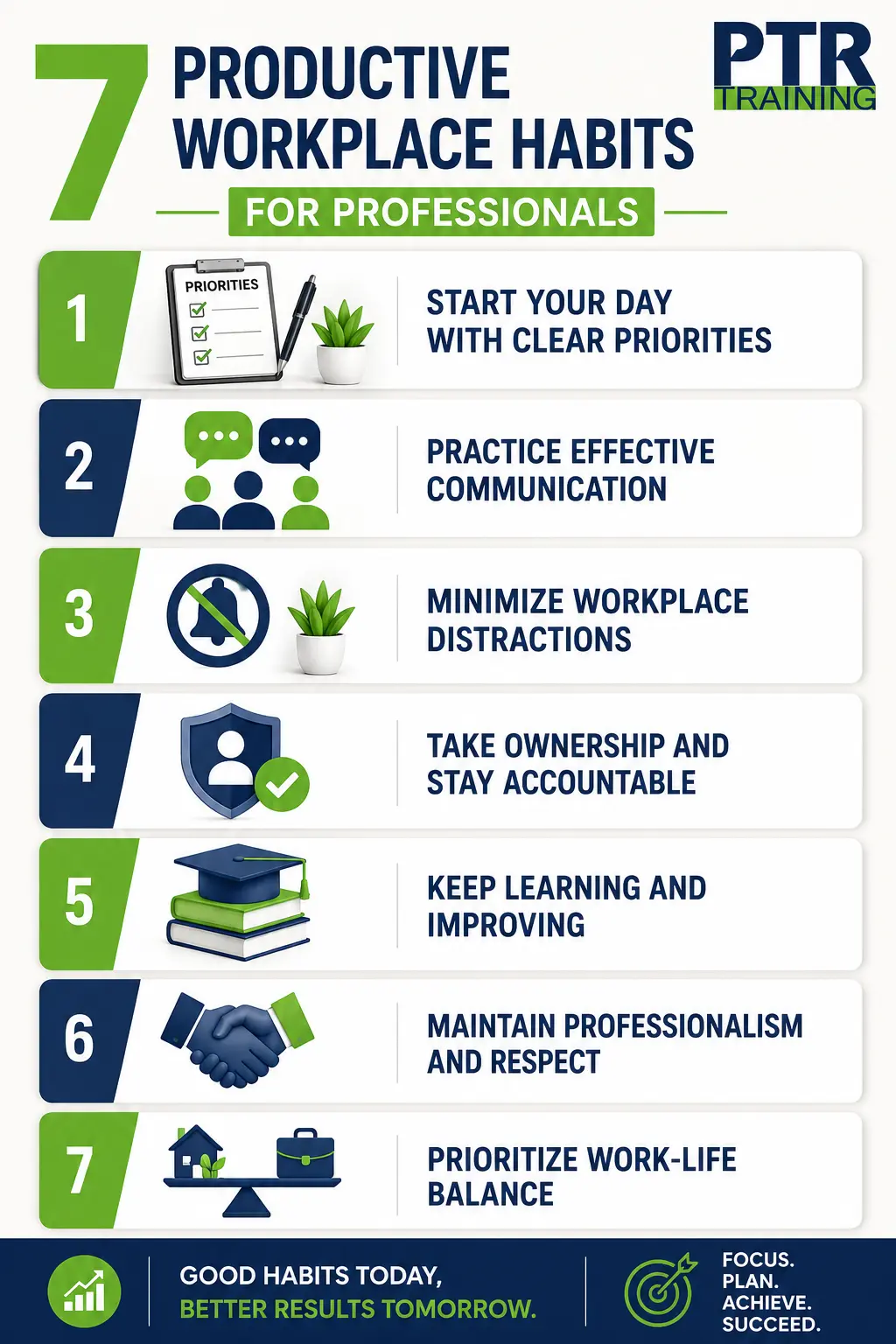
1. Start Your Day With Clear Priorities
One of the most effective workplace habits is planning your day before tasks start piling up. Without clear priorities, it’s easy to spend time reacting to emails, meetings, and distractions rather than focusing on meaningful work.
A simple way to start
Starting your day without a plan often leads to reactive work. You may spend hours answering emails or attending meetings without making real progress on important tasks.
Instead, begin each morning by identifying your top priorities. Focus on the tasks that have the greatest impact before taking on smaller responsibilities. Many professionals also use time blocking to reserve uninterrupted focus time throughout the day.
Employees who work with a clear structure usually experience less stress and higher productivity because they spend more time on meaningful work rather than constant task-switching.
Productivity Tip
Try using the “most important task” method. Finish one critical task before moving to smaller activities.
2. Practice Effective Communication
Effective communication helps employees work more efficiently and avoid unnecessary misunderstandings. When expectations are clear, teams can complete projects faster and collaborate more effectively. Poor communication often leads to delays, confusion, and repeated mistakes in the workplace.
Employees who respond professionally, listen actively, and share updates clearly usually build stronger workplace relationships. Research from Gallup also shows that employees perform better when communication and expectations are consistent across teams.
Want to improve communication and collaboration within your teams? Explore leadership and workplace productivity training programs designed for modern organizations.
3. Minimize Workplace Distractions
Workplace distractions can reduce focus and lower work quality. Constant notifications, multitasking, and unnecessary interruptions often make simple tasks take longer than expected. Over time, this can increase stress and decrease productivity.
Creating dedicated focus time during the day can help employees stay organized and efficient. Simple habits like limiting notifications, avoiding multitasking, and maintaining a clean workspace can improve concentration and support better daily performance.
4. Take Ownership and Stay Accountable
Accountability is an important workplace habit that helps build trust and improve teamwork. Employees who take responsibility for their work are more likely to meet deadlines, communicate openly, and contribute positively to team performance.
In many workplaces, accountable employees are viewed as reliable professionals because they focus on solutions instead of excuses. This habit strengthens workplace culture and reduces the need for constant managerial supervision.
5. Keep Learning and Improving
Employees who continue learning are often more adaptable and productive in changing work environments. As businesses adopt new technologies and digital tools, developing new skills has become essential for long-term professional growth.
Simple habits like attending training sessions, reading industry content, and asking for feedback can improve workplace performance over time. Employees who invest in learning are usually better prepared to handle challenges and contribute more effectively to their teams.
Examples of valuable workplace skills
| Skill | Productivity Benefit |
| Time Management | Helps complete tasks efficiently |
| Communication | Reduces misunderstandings |
| Emotional Intelligence | Improves teamwork |
| Leadership | Supports decision-making |
| Digital Literacy | Increases efficiency |
Organizations that invest in employee learning often see stronger performance, engagement, and retention across teams.
6. Maintain Professionalism and Respect
Professional behavior creates a healthier and more productive work environment. Simple habits like punctuality, respect, and dependability significantly improve workplace culture.
Professionalism in the workplace is often reflected through small daily behaviors. Arriving prepared for meetings, respecting deadlines, and communicating respectfully with coworkers all contribute to a healthier work environment.
Employees who remain calm under pressure and maintain a positive attitude in the face of challenges are often viewed as dependable team members. Over time, these habits strengthen collaboration and improve workplace culture across teams.
A respectful workplace reduces conflict and encourages collaboration. When employees feel respected and supported, they are more likely to stay motivated and productive.
7. Prioritize Work-Life Balance
Maintaining a healthy work-life balance is important for long-term productivity and employee well-being. Employees who constantly feel exhausted or overwhelmed often struggle to maintain focus and consistent performance at work.
Taking short breaks, managing workloads realistically, and avoiding excessive overtime can help reduce burnout. Employees who maintain a balance between work and personal life are usually more productive, motivated, and better prepared to handle daily responsibilities.
How Positive Workplace Habits Impact Team Performance
Good workplace habits not only help individuals, but they also strengthen entire teams and organizations.
Benefits for businesses
- Improved employee engagement
- Better collaboration
- Faster project completion
- Lower turnover rates
- Reduced absenteeism
- Stronger workplace culture
Organizations that encourage positive habits often build more resilient, high-performing teams.
Common Workplace Habits That Reduce Productivity
While building good habits is important, avoiding harmful habits matters just as much.
Productivity-draining workplace habits
- Constant multitasking
- Procrastination
- Poor communication
- Frequent lateness
- Ignoring feedback
- Disorganized workspaces
- Excessive meetings
- Lack of prioritization
Recognizing these behaviors early can help employees improve performance before productivity declines.
How Organizations Can Encourage Better Workplace Habits
Organizations play an important role in helping employees develop productive workplace habits. A positive work environment, clear communication, and supportive leadership can keep employees motivated, focused, and engaged in their daily responsibilities.
Providing regular training, recognizing employee contributions, and promoting work-life balance are some of the most effective ways organizations can improve workplace productivity. When employees feel supported and valued, they are more likely to perform consistently and contribute positively to the overall workplace culture.
If your organization wants to improve employee productivity, communication, and workplace performance, consider professional corporate training programs focused on leadership development and workplace effectiveness.
Improve Workplace Productivity Through Employee Development
Organizations that encourage positive workplace habits often experience stronger collaboration, higher employee engagement, and better long-term performance. Training programs focused on communication, productivity, leadership, and workplace effectiveness can help employees build habits that support both individual and organizational success.
Explore workplace productivity and leadership development programs designed for modern teams.
Frequently Asked Questions
What are good workplace habits?
Good workplace habits are positive behaviors that improve productivity, teamwork, and professionalism. Examples include time management, communication, accountability, and continuous learning.
Why are workplace habits important?
Workplace habits influence how effectively employees perform their daily responsibilities. Strong habits improve focus, efficiency, collaboration, and overall workplace culture.
How can employees improve workplace productivity?
Employees can improve productivity by prioritizing tasks, minimizing distractions, communicating clearly, managing time effectively, and maintaining a healthy work-life balance.
What habits reduce productivity at work?
Common productivity-reducing habits include procrastination, multitasking, poor communication, lack of organization, and constant distractions.
How do workplace habits affect employee engagement?
Positive workplace habits foster better teamwork, lower stress, and stronger communication, helping employees stay engaged and motivated at work.
Final Thoughts
Developing effective workplace habits is vital for long-term career growth. Everyday actions like prioritizing, communicating, being accountable, and engaging in ongoing learning can boost individual performance and enhance the workplace environment. As companies continue to change, those that promote positive habits will be better equipped to increase productivity, involvement, and employee satisfaction.