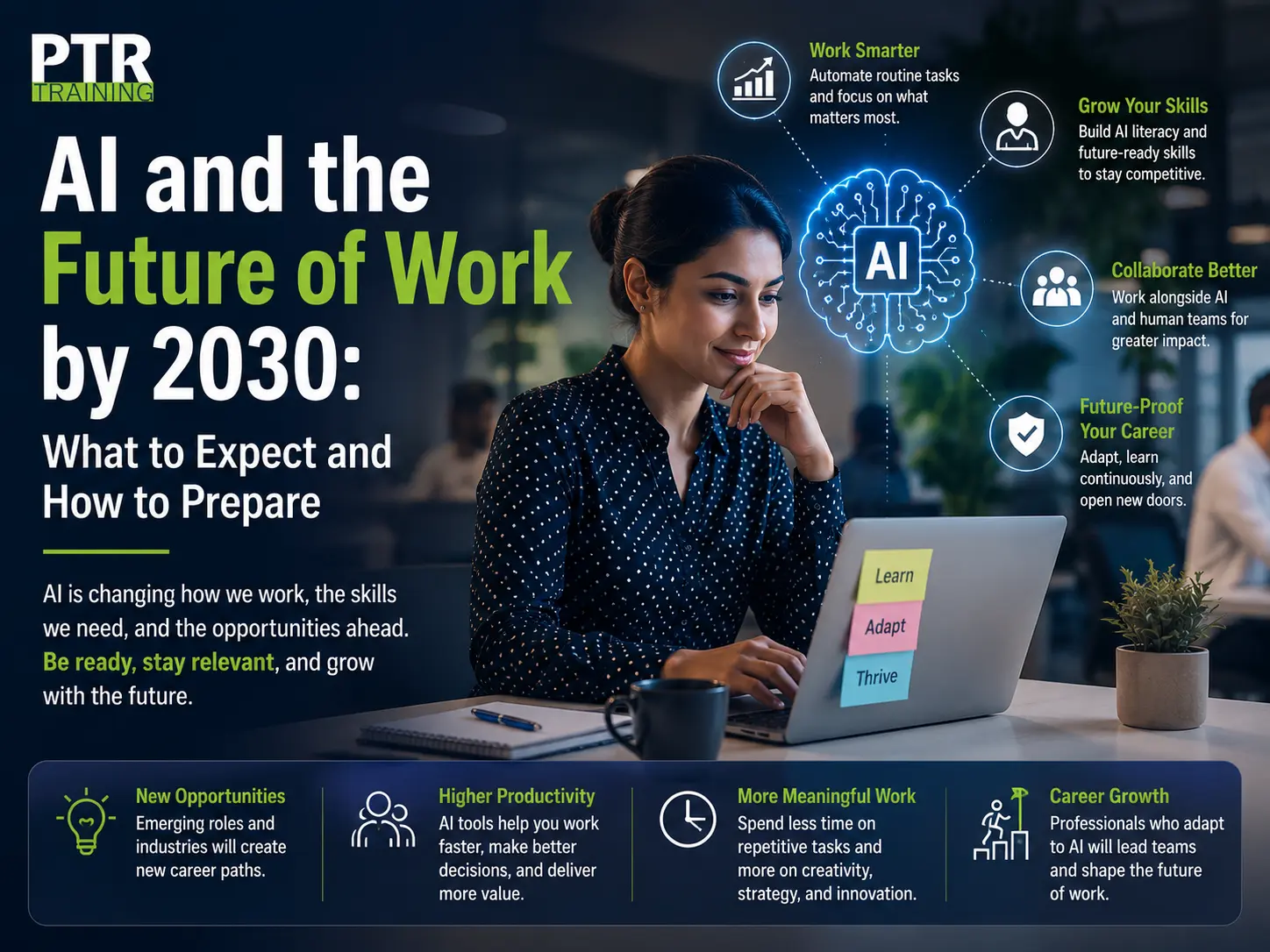
AI and the Future of Work by 2030: What to Expect and How to Prepare

AI and the Future of Work by 2030

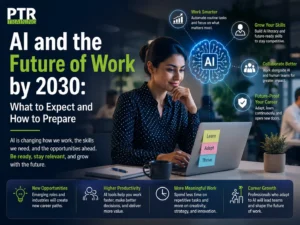
Artificial intelligence is already influencing how organizations hire, develop talent, make decisions, and get work done. As AI capabilities continue to evolve, leaders face important questions about workforce readiness, changing skill demands, and how to prepare employees for the future of work.

The World Economic Forum’s latest report, Four Futures for Jobs in the New Economy: AI and Talent in 2030, explores what the future of work could look like over the next five years. One thing is clear: the question is no longer whether AI will transform the workplace, but how quickly organizations can prepare their people and strategies for what’s ahead.

As AI moves from experimentation to business-critical operations, organizations must rethink talent strategies, workforce development, and human-machine collaboration.

Why the Job Market Is Changing Faster Than Ever

The global labor market is experiencing one of the most significant transformations in modern history. While technological innovation has always influenced employment patterns, the rapid commercialization of artificial intelligence is accelerating change at a pace few organizations have experienced before.

According to the World Economic Forum's latest research, AI is moving beyond experimentation and becoming deeply integrated into business operations. At the same time, demographic shifts, evolving workforce expectations, geopolitical uncertainties, and skill shortages are forcing organizations to rethink how work is structured and how talent is developed.

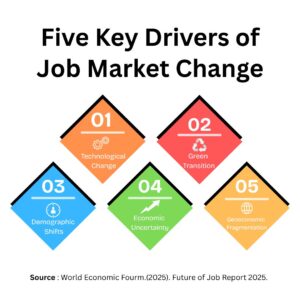
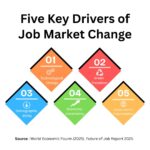
Several key forces are contributing to this transformation:

  • Rapid commercialization of AI and automation
  • Workforce skill shortages and reskilling challenges
  • Aging populations in many developed economies
  • Economic and geopolitical uncertainty
  • Expansion of digital and remote work models

Rather than acting independently, these trends are interacting with one another, creating new opportunities while also introducing significant risks for businesses and workers alike.

The Growing Role of Agentic AI

One of the most significant developments highlighted in the report is the emergence of agentic AI. Unlike traditional AI systems that assist with specific tasks, agentic AI can autonomously plan, execute, and coordinate complex workflows with minimal human intervention.

As businesses increasingly experiment with agentic systems, leaders will need to establish governance frameworks, oversight mechanisms, and workforce strategies that ensure these technologies are deployed responsibly and effectively.

As agentic AI becomes more capable, organizations will need to balance innovation with responsible governance, workforce readiness, and human oversight.

Human-AI Collaboration Will Define Future Jobs

One of the strongest themes emerging from the World Economic Forum's latest research is that the future of work is not a competition between humans and machines. Instead, it is increasingly becoming a partnership.

Many early discussions about AI focused on job replacement. However, organizations are discovering that the greatest productivity gains come from combining human expertise with AI capabilities. AI can process vast amounts of information, automate repetitive tasks, and generate insights in seconds. Humans, on the other hand, continue to provide critical thinking, judgment, creativity, emotional intelligence, and ethical decision-making.

This shift is already visible across industries:

  • Software developers use AI to accelerate coding and testing.
  • Healthcare professionals leverage AI-assisted diagnostics.
  • Customer service teams work alongside intelligent virtual agents.
  • Educators use AI-powered learning tools to personalize instruction.

As AI becomes more sophisticated, the most valuable employees will not necessarily be those who compete with technology, but those who know how to collaborate effectively with it.

Four Possible Futures for Jobs by 2030

The World Economic Forum outlines four possible scenarios that could emerge depending on AI advancement and workforce readiness.

These scenarios are not predictions. Instead, they serve as strategic frameworks that help organizations understand possible outcomes and prepare for different futures.
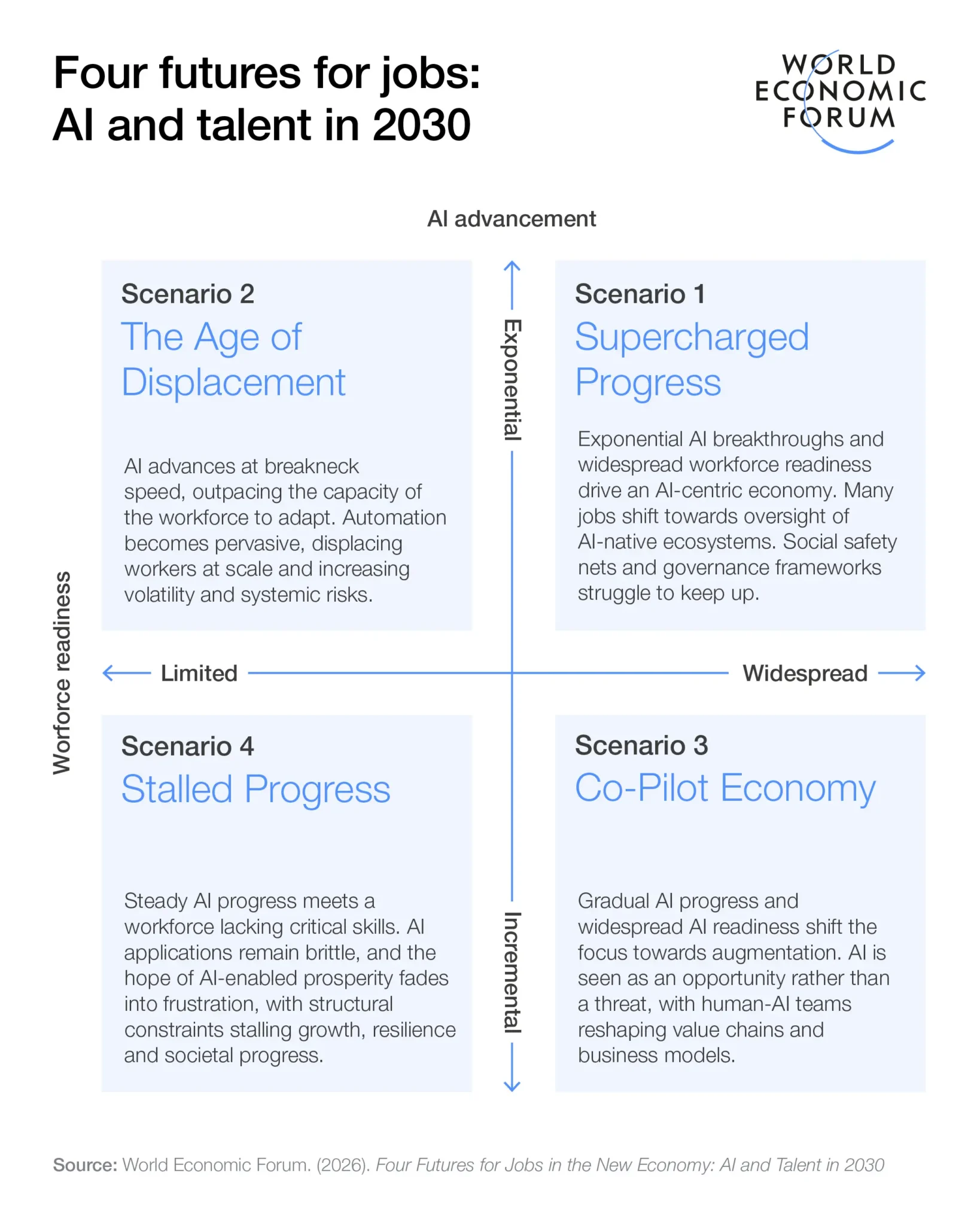
Four Possible Futures for Jobs by 2030

Source: WEF. Four Futures for Jobs in the New Economy: AI and Talent in 2030

1. Supercharged Progress

In the most optimistic scenario, AI development accelerates rapidly while workforce readiness keeps pace with technological change.

Businesses successfully integrate advanced AI systems into their operations, resulting in significant productivity gains and breakthrough innovations. New industries emerge, and entirely new job categories are created.

Workers increasingly take on roles focused on supervising, managing, and collaborating with intelligent systems. Geographic barriers become less important as digital technologies expand access to talent and global opportunities.

However, even in this positive future, challenges remain. Governments and regulatory systems may struggle to keep pace with technological advancement, raising concerns about ethics, governance, and workforce transitions.

2. The Age of Displacement

The second scenario presents a more challenging future.

In this case, AI technology advances rapidly, but workforce adaptation fails to keep pace. Businesses aggressively automate operations to achieve efficiency and productivity gains.

While organizations benefit from lower costs and improved performance, workers face significant disruption. Educational institutions and reskilling programs struggle to prepare people for changing job requirements.

As automation expands, many workers find themselves displaced faster than they can transition into new roles. Social and economic inequality increases, creating pressure on governments and labor markets.

This scenario highlights the risks of technological progress without adequate investment in workforce development.

3. The Co-Pilot Economy

The Co-Pilot Economy envisions a future where AI adoption advances steadily and organizations prioritize augmentation over widespread automation.

In this future, AI adoption continues steadily, but organizations focus on augmentation rather than widespread replacement. Human expertise remains highly valuable, and AI serves primarily as a productivity-enhancing partner.

Businesses invest heavily in employee training, workforce mobility, and digital infrastructure. Workers gain access to AI tools that help them perform tasks more efficiently while maintaining meaningful human oversight.

Rather than eliminating jobs on a large scale, AI transforms existing roles and creates opportunities for workers to become more productive and innovative.

The result is a balanced environment where technology and talent evolve together.

4. Stalled Progress

The final scenario combines slower AI advancement with insufficient workforce readiness.

Economic pressures, skill shortages, and limited investment slow technological transformation. Organizations adopt AI selectively, focusing on incremental improvements rather than major operational changes.

While some productivity gains occur, the broader economic impact remains limited. Companies with access to advanced talent and technology continue to thrive, while others struggle to compete.

In this future, the benefits of AI remain unevenly distributed, contributing to widening gaps between industries, regions, and workforce groups.

Which Jobs Will Benefit Most from AI?

The report suggests that workers who can effectively collaborate with AI systems and adapt to technology-enabled workplaces are likely to be better positioned in the future labor market. While the report does not predict specific job titles, opportunities are likely to expand across:

  • Artificial intelligence and data-related roles
  • Cybersecurity and digital infrastructure
  • Education and workforce development
  • Human-centered professions requiring judgment and creativity
  • AI governance, oversight, and responsible technology implementation
  • Industries integrating human-AI collaboration into core operations

The Skills That Will Matter Most by 2030

Regardless of which future scenario unfolds, one theme remains consistent: skills will determine workforce success.

The World Economic Forum emphasizes that technology alone will not define future competitiveness. The ability of individuals and organizations to develop relevant skills will be equally important.

Technical capabilities will become increasingly valuable as AI adoption expands. However, human-centered skills will remain essential because they complement the strengths of intelligent systems.

Some of the most important skills expected to grow in demand include:

  • Artificial Intelligence Literacy
  • Data Analysis and Interpretation
  • Cybersecurity Awareness
  • Technological Literacy
  • Analytical Thinking
  • Critical Thinking
  • Creative Problem Solving
  • Leadership and Influence
  • Communication Skills
  • Adaptability and Resilience
  • Emotional Intelligence
  • Continuous Learning

Perhaps the most important skill of all is the ability to learn continuously. As technologies evolve and industries transform, workers will need to update their knowledge and capabilities throughout their careers.

The traditional model of learning a profession once and relying on that knowledge for decades is becoming increasingly outdated.

LinkedIn estimates that demand for AI literacy skills increased by approximately 70% between 2024 and 2025, demonstrating how quickly AI-related capabilities are becoming essential in the labor market.

Have you read? How the Job Market Is Changing: Key Insights from WEF Future of Jobs 2025

Why Reskilling and Upskilling Are Essential

The future of jobs depends not only on technology adoption but also on workforce preparedness.

Organizations that invest in reskilling and upskilling initiatives will be better equipped to adapt to change. Likewise, workers who actively pursue learning opportunities will improve their career prospects in an increasingly competitive labor market.

Continuous learning is becoming a strategic necessity rather than an optional career enhancement.

Businesses are beginning to recognize that talent development and technology implementation must move forward together. Deploying AI without preparing employees to use it effectively can limit productivity gains and increase resistance to change.

Successful organizations are creating cultures where learning becomes part of everyday work rather than an occasional training activity.
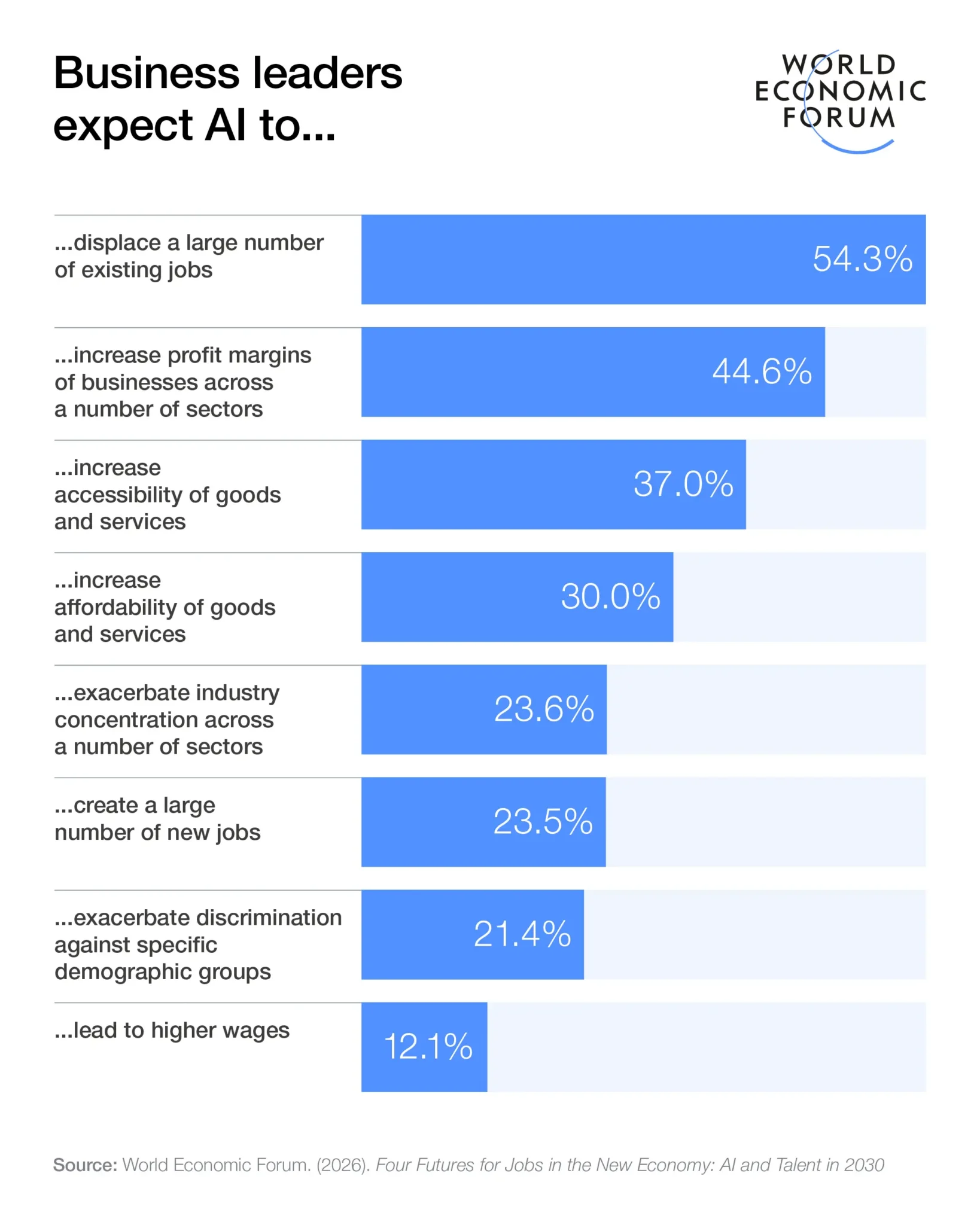
Business leaders expect to AI

Source: WEF. Four Futures for Jobs in the New Economy: AI and Talent in 2030

No-Regret Strategies for Businesses

The World Economic Forum recommends several “no-regret” strategies that can help organizations succeed regardless of how AI and workforce trends evolve by 2030.
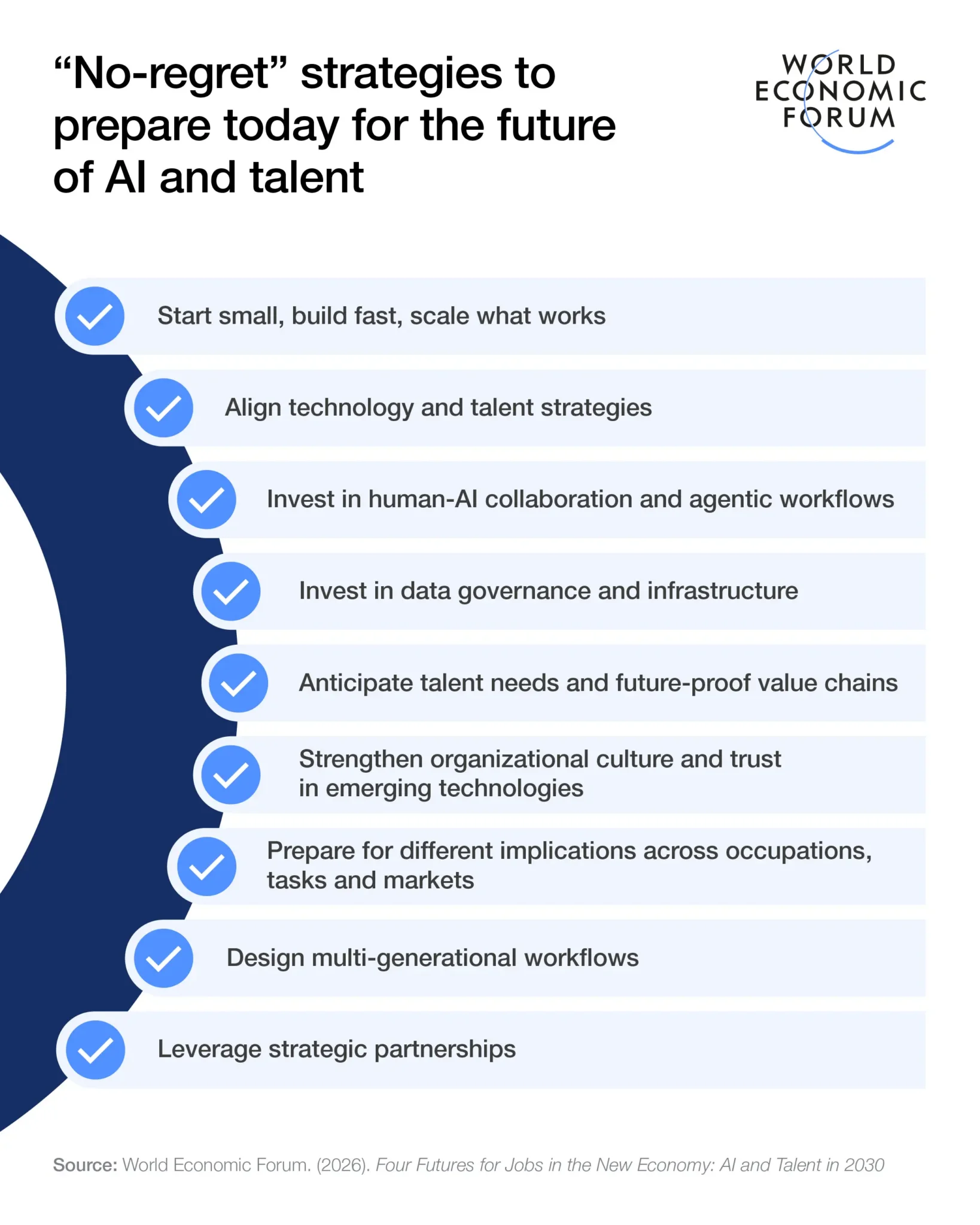
No-Regret Strategies for Businesses

Source: WEF. Four Futures for Jobs in the New Economy: AI and Talent in 2030

Business leaders should focus on building adaptability, resilience, and workforce readiness through practical actions such as:

  • Start small, build fast, and scale successful AI initiatives.
  • Align technology investments with talent development strategies.
  • Invest in human-AI collaboration and agentic workflows.
  • Strengthen data governance and digital infrastructure.
  • Anticipate future talent needs and resilient value chains.
  • Foster organizational trust in emerging technologies.
  • Prepare for workforce impacts across roles, tasks, and markets.
  • Design multi-generational work environments.
  • Leverage strategic partnerships to accelerate innovation and growth.

Organizations that act early will be better positioned to navigate uncertainty and capture emerging opportunities.

What Workers Can Do to Prepare

For individuals, the future job market presents both challenges and opportunities.

While some traditional roles may decline, new career paths are emerging across technology, healthcare, education, sustainability, and other sectors. The workers who benefit most will be those who embrace change rather than resist it.

Practical steps include:

  • Learning AI fundamentals and digital tools
  • Building analytical and problem-solving skills
  • Strengthening communication and leadership abilities
  • Pursuing professional certifications and training
  • Staying informed about industry trends
  • Staying adaptable as technology and workplace demands evolve

Career success in the coming decade will depend less on specific job titles and more on adaptability, curiosity, and a willingness to continuously develop new capabilities.

Frequently Asked Questions

1. What is the World Economic Forum's AI and Talent in 2030 report?

The report explores how artificial intelligence and workforce readiness could shape jobs, industries, and the global economy by 2030 through four potential future scenarios.

2. Will AI replace jobs by 2030?

AI is expected to automate some routine tasks and job functions. However, it is also likely to create new opportunities and increase demand for workers who can effectively collaborate with AI technologies.

3. What is the Co-Pilot Economy?

The Co-Pilot Economy is a future scenario in which AI supports and augments human workers rather than replacing them, enabling balanced growth and productivity improvements.

4. What skills will be most valuable in the future job market?

Key skills include AI literacy, analytical thinking, critical thinking, leadership, adaptability, creativity, cybersecurity knowledge, communication, and continuous learning.

5. How can businesses prepare for the future of work?

Businesses should invest in workforce training, human-AI collaboration strategies, responsible AI governance, continuous learning programs, and flexible talent development models.

6. What is Agentic AI and why is it important?

Agentic AI refers to AI systems that can autonomously perform tasks, make decisions, and execute workflows with limited human intervention. It is expected to play a major role in future workplace transformation.

7. Which industries are expected to experience significant AI-driven transformation?

The report suggests that AI-driven transformation will affect virtually every industry. Sectors such as manufacturing, financial services, education, healthcare, logistics, energy, and professional services are already exploring AI integration to improve productivity, innovation, and operational efficiency.

Conclusion

The future of jobs is no longer defined solely by automation. It is increasingly shaped by how effectively organizations combine artificial intelligence with human talent.

The World Economic Forum's Four Futures for Jobs in the New Economy: AI and Talent in 2030 highlights that multiple outcomes are possible—from rapid innovation and growth to widespread displacement and inequality.

The difference will depend on the decisions businesses, governments, educators, and workers make today.

Organizations that invest in responsible AI adoption, workforce development, and human-AI collaboration will be best positioned for success.

For workers, continuous learning, adaptability, and AI literacy are becoming essential career requirements.

The future of work will not be created by technology alone—it will be shaped by how people choose to use it.

You May Also Like

In-Demand Job SkillsArtificial Intelligence (AI)
AI and the Future of Work by 2030

AI and the Future of Work by 2030: What to Expect and How to Prepare

AI and the Future of Work by 2030

Artificial intelligence is already influencing how organizations hire, develop talent, make decisions, and get work done. As AI capabilities continue to evolve, leaders face important questions about workforce readiness, changing skill demands, and how to prepare employees for the future of work.

The World Economic Forum’s latest report, Four Futures for Jobs in the New Economy: AI and Talent in 2030, explores what the future of work could look like over the next five years. One thing is clear: the question is no longer whether AI will transform the workplace, but how quickly organizations can prepare their people and strategies for what’s ahead.

As AI moves from experimentation to business-critical operations, organizations must rethink talent strategies, workforce development, and human-machine collaboration.

Why the Job Market Is Changing Faster Than Ever

The global labor market is experiencing one of the most significant transformations in modern history. While technological innovation has always influenced employment patterns, the rapid commercialization of artificial intelligence is accelerating change at a pace few organizations have experienced before.

According to the World Economic Forum's latest research, AI is moving beyond experimentation and becoming deeply integrated into business operations. At the same time, demographic shifts, evolving workforce expectations, geopolitical uncertainties, and skill shortages are forcing organizations to rethink how work is structured and how talent is developed.

Several key forces are contributing to this transformation:

  • Rapid commercialization of AI and automation
  • Workforce skill shortages and reskilling challenges
  • Aging populations in many developed economies
  • Economic and geopolitical uncertainty
  • Expansion of digital and remote work models

Rather than acting independently, these trends are interacting with one another, creating new opportunities while also introducing significant risks for businesses and workers alike.

The Growing Role of Agentic AI

One of the most significant developments highlighted in the report is the emergence of agentic AI. Unlike traditional AI systems that assist with specific tasks, agentic AI can autonomously plan, execute, and coordinate complex workflows with minimal human intervention.

As businesses increasingly experiment with agentic systems, leaders will need to establish governance frameworks, oversight mechanisms, and workforce strategies that ensure these technologies are deployed responsibly and effectively.

As agentic AI becomes more capable, organizations will need to balance innovation with responsible governance, workforce readiness, and human oversight.

Human-AI Collaboration Will Define Future Jobs

One of the strongest themes emerging from the World Economic Forum's latest research is that the future of work is not a competition between humans and machines. Instead, it is increasingly becoming a partnership.

Many early discussions about AI focused on job replacement. However, organizations are discovering that the greatest productivity gains come from combining human expertise with AI capabilities. AI can process vast amounts of information, automate repetitive tasks, and generate insights in seconds. Humans, on the other hand, continue to provide critical thinking, judgment, creativity, emotional intelligence, and ethical decision-making.

This shift is already visible across industries:

  • Software developers use AI to accelerate coding and testing.
  • Healthcare professionals leverage AI-assisted diagnostics.
  • Customer service teams work alongside intelligent virtual agents.
  • Educators use AI-powered learning tools to personalize instruction.

As AI becomes more sophisticated, the most valuable employees will not necessarily be those who compete with technology, but those who know how to collaborate effectively with it.

Four Possible Futures for Jobs by 2030

The World Economic Forum outlines four possible scenarios that could emerge depending on AI advancement and workforce readiness.

These scenarios are not predictions. Instead, they serve as strategic frameworks that help organizations understand possible outcomes and prepare for different futures.

Four Possible Futures for Jobs by 2030

Source: WEF. Four Futures for Jobs in the New Economy: AI and Talent in 2030

1. Supercharged Progress

In the most optimistic scenario, AI development accelerates rapidly while workforce readiness keeps pace with technological change.

Businesses successfully integrate advanced AI systems into their operations, resulting in significant productivity gains and breakthrough innovations. New industries emerge, and entirely new job categories are created.

Workers increasingly take on roles focused on supervising, managing, and collaborating with intelligent systems. Geographic barriers become less important as digital technologies expand access to talent and global opportunities.

However, even in this positive future, challenges remain. Governments and regulatory systems may struggle to keep pace with technological advancement, raising concerns about ethics, governance, and workforce transitions.

2. The Age of Displacement

The second scenario presents a more challenging future.

In this case, AI technology advances rapidly, but workforce adaptation fails to keep pace. Businesses aggressively automate operations to achieve efficiency and productivity gains.

While organizations benefit from lower costs and improved performance, workers face significant disruption. Educational institutions and reskilling programs struggle to prepare people for changing job requirements.

As automation expands, many workers find themselves displaced faster than they can transition into new roles. Social and economic inequality increases, creating pressure on governments and labor markets.

This scenario highlights the risks of technological progress without adequate investment in workforce development.

3. The Co-Pilot Economy

The Co-Pilot Economy envisions a future where AI adoption advances steadily and organizations prioritize augmentation over widespread automation.

In this future, AI adoption continues steadily, but organizations focus on augmentation rather than widespread replacement. Human expertise remains highly valuable, and AI serves primarily as a productivity-enhancing partner.

Businesses invest heavily in employee training, workforce mobility, and digital infrastructure. Workers gain access to AI tools that help them perform tasks more efficiently while maintaining meaningful human oversight.

Rather than eliminating jobs on a large scale, AI transforms existing roles and creates opportunities for workers to become more productive and innovative.

The result is a balanced environment where technology and talent evolve together.

4. Stalled Progress

The final scenario combines slower AI advancement with insufficient workforce readiness.

Economic pressures, skill shortages, and limited investment slow technological transformation. Organizations adopt AI selectively, focusing on incremental improvements rather than major operational changes.

While some productivity gains occur, the broader economic impact remains limited. Companies with access to advanced talent and technology continue to thrive, while others struggle to compete.

In this future, the benefits of AI remain unevenly distributed, contributing to widening gaps between industries, regions, and workforce groups.

Which Jobs Will Benefit Most from AI?

The report suggests that workers who can effectively collaborate with AI systems and adapt to technology-enabled workplaces are likely to be better positioned in the future labor market. While the report does not predict specific job titles, opportunities are likely to expand across:

  • Artificial intelligence and data-related roles
  • Cybersecurity and digital infrastructure
  • Education and workforce development
  • Human-centered professions requiring judgment and creativity
  • AI governance, oversight, and responsible technology implementation
  • Industries integrating human-AI collaboration into core operations

The Skills That Will Matter Most by 2030

Regardless of which future scenario unfolds, one theme remains consistent: skills will determine workforce success.

The World Economic Forum emphasizes that technology alone will not define future competitiveness. The ability of individuals and organizations to develop relevant skills will be equally important.

Technical capabilities will become increasingly valuable as AI adoption expands. However, human-centered skills will remain essential because they complement the strengths of intelligent systems.

Some of the most important skills expected to grow in demand include:

  • Artificial Intelligence Literacy
  • Data Analysis and Interpretation
  • Cybersecurity Awareness
  • Technological Literacy
  • Analytical Thinking
  • Critical Thinking
  • Creative Problem Solving
  • Leadership and Influence
  • Communication Skills
  • Adaptability and Resilience
  • Emotional Intelligence
  • Continuous Learning

Perhaps the most important skill of all is the ability to learn continuously. As technologies evolve and industries transform, workers will need to update their knowledge and capabilities throughout their careers.

The traditional model of learning a profession once and relying on that knowledge for decades is becoming increasingly outdated.

LinkedIn estimates that demand for AI literacy skills increased by approximately 70% between 2024 and 2025, demonstrating how quickly AI-related capabilities are becoming essential in the labor market.

Have you read? How the Job Market Is Changing: Key Insights from WEF Future of Jobs 2025

Why Reskilling and Upskilling Are Essential

The future of jobs depends not only on technology adoption but also on workforce preparedness.

Organizations that invest in reskilling and upskilling initiatives will be better equipped to adapt to change. Likewise, workers who actively pursue learning opportunities will improve their career prospects in an increasingly competitive labor market.

Continuous learning is becoming a strategic necessity rather than an optional career enhancement.

Businesses are beginning to recognize that talent development and technology implementation must move forward together. Deploying AI without preparing employees to use it effectively can limit productivity gains and increase resistance to change.

Successful organizations are creating cultures where learning becomes part of everyday work rather than an occasional training activity.

Business leaders expect to AI

Source: WEF. Four Futures for Jobs in the New Economy: AI and Talent in 2030

No-Regret Strategies for Businesses

The World Economic Forum recommends several “no-regret” strategies that can help organizations succeed regardless of how AI and workforce trends evolve by 2030.

No-Regret Strategies for Businesses

Source: WEF. Four Futures for Jobs in the New Economy: AI and Talent in 2030

Business leaders should focus on building adaptability, resilience, and workforce readiness through practical actions such as:

  • Start small, build fast, and scale successful AI initiatives.
  • Align technology investments with talent development strategies.
  • Invest in human-AI collaboration and agentic workflows.
  • Strengthen data governance and digital infrastructure.
  • Anticipate future talent needs and resilient value chains.
  • Foster organizational trust in emerging technologies.
  • Prepare for workforce impacts across roles, tasks, and markets.
  • Design multi-generational work environments.
  • Leverage strategic partnerships to accelerate innovation and growth.

Organizations that act early will be better positioned to navigate uncertainty and capture emerging opportunities.

What Workers Can Do to Prepare

For individuals, the future job market presents both challenges and opportunities.

While some traditional roles may decline, new career paths are emerging across technology, healthcare, education, sustainability, and other sectors. The workers who benefit most will be those who embrace change rather than resist it.

Practical steps include:

  • Learning AI fundamentals and digital tools
  • Building analytical and problem-solving skills
  • Strengthening communication and leadership abilities
  • Pursuing professional certifications and training
  • Staying informed about industry trends
  • Staying adaptable as technology and workplace demands evolve

Career success in the coming decade will depend less on specific job titles and more on adaptability, curiosity, and a willingness to continuously develop new capabilities.

Frequently Asked Questions

1. What is the World Economic Forum's AI and Talent in 2030 report?

The report explores how artificial intelligence and workforce readiness could shape jobs, industries, and the global economy by 2030 through four potential future scenarios.

2. Will AI replace jobs by 2030?

AI is expected to automate some routine tasks and job functions. However, it is also likely to create new opportunities and increase demand for workers who can effectively collaborate with AI technologies.

3. What is the Co-Pilot Economy?

The Co-Pilot Economy is a future scenario in which AI supports and augments human workers rather than replacing them, enabling balanced growth and productivity improvements.

4. What skills will be most valuable in the future job market?

Key skills include AI literacy, analytical thinking, critical thinking, leadership, adaptability, creativity, cybersecurity knowledge, communication, and continuous learning.

5. How can businesses prepare for the future of work?

Businesses should invest in workforce training, human-AI collaboration strategies, responsible AI governance, continuous learning programs, and flexible talent development models.

6. What is Agentic AI and why is it important?

Agentic AI refers to AI systems that can autonomously perform tasks, make decisions, and execute workflows with limited human intervention. It is expected to play a major role in future workplace transformation.

7. Which industries are expected to experience significant AI-driven transformation?

The report suggests that AI-driven transformation will affect virtually every industry. Sectors such as manufacturing, financial services, education, healthcare, logistics, energy, and professional services are already exploring AI integration to improve productivity, innovation, and operational efficiency.

Conclusion

The future of jobs is no longer defined solely by automation. It is increasingly shaped by how effectively organizations combine artificial intelligence with human talent.

The World Economic Forum's Four Futures for Jobs in the New Economy: AI and Talent in 2030 highlights that multiple outcomes are possible—from rapid innovation and growth to widespread displacement and inequality.

The difference will depend on the decisions businesses, governments, educators, and workers make today.

Organizations that invest in responsible AI adoption, workforce development, and human-AI collaboration will be best positioned for success.

For workers, continuous learning, adaptability, and AI literacy are becoming essential career requirements.

The future of work will not be created by technology alone—it will be shaped by how people choose to use it.