The Most In-Demand Professional Skills for 2027

Professional Skills for 2027

The workplace is changing, and the skills that helped professionals succeed in the past may not be enough for the challenges ahead. Artificial intelligence (AI), evolving business priorities, and new ways of working are changing how organizations hire, develop, and support their employees.

For employers, this creates an important question: Which capabilities should your workforce develop to remain effective in 2027 and beyond?

The answer goes beyond technical expertise. Professionals also need strong communication, sound judgment, leadership, adaptability, and a commitment to continuous learning. These capabilities help people work through uncertainty, collaborate across teams, and turn knowledge into meaningful results.

Understanding the most in-demand professional skills for 2027 can help you make better decisions about employee development, leadership training, and workforce planning.

The most valuable professional skills for 2027 will combine human judgment with technical confidence. Organizations should prioritize critical thinking, communication, leadership, adaptability, emotional intelligence, AI literacy, and continuous learning.

Why Professional Skills Matter in 2027

As job responsibilities evolve, employees need new capabilities to keep pace with changing business demands. Professional development helps organizations prepare their teams for emerging challenges.

According to the World Economic Forum’s Future of Jobs Report 2025, 39% of workers’ existing skill sets are expected to change or become outdated by 2030. The report identifies analytical thinking, leadership, resilience, and technological literacy as important workforce skills.

For 2027, organizations should focus on combining technical knowledge with communication, critical thinking, and adaptability. The goal is to connect training with real workplace needs and measurable business outcomes.

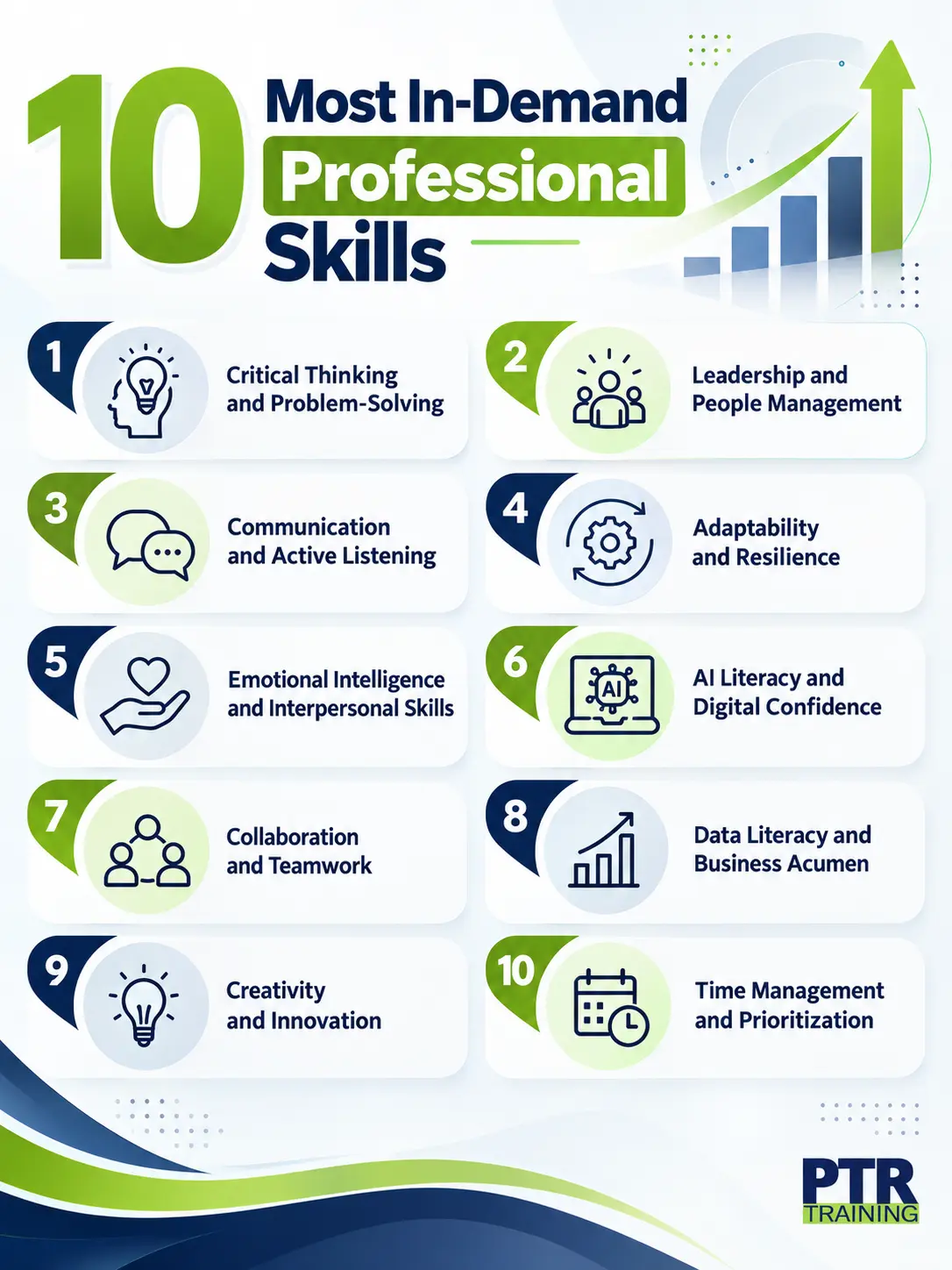
10 Most In-Demand Professional Skills for 2027

The following skills reflect workforce research, evolving business needs, and the capabilities organizations can develop through structured training.
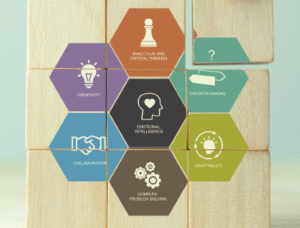
10 Most In-Demand Professional Skills

1. Critical Thinking and Problem-Solving

Critical thinking helps professionals evaluate information, recognize assumptions, and make informed decisions. Problem-solving turns that analysis into practical action.

These skills become especially important when employees face incomplete information, competing priorities, or unfamiliar challenges. They also help teams avoid reacting to symptoms without addressing the underlying problem.

The World Economic Forum identifies analytical thinking as a leading core skill among employers surveyed for its 2025 report.

Workplace example: A project repeatedly misses deadlines. Instead of immediately asking employees to work faster, a manager examines approval delays, workload distribution, communication gaps, and resource availability.

How to develop it: Use case studies, scenario-based exercises, structured decision-making methods, and group problem-solving activities. Encourage employees to explain their reasoning and consider alternative solutions.

2. Leadership and People Management

Leadership is not limited to executives or employees with formal management titles. Professionals at different levels influence decisions, coordinate work, support colleagues, and help teams achieve shared goals.

Effective leaders establish clear expectations, provide constructive feedback, manage conflict, and create conditions where people can perform well. They also recognize when a team needs direction and when employees need greater autonomy.

As organizations adapt to new technologies and business priorities, strong leadership becomes essential for guiding people through uncertainty.

Workplace example: A department introduces a new workflow. A capable manager explains the reason for the change, addresses employee concerns, sets expectations, and monitors progress without micromanaging every task.

How to develop it: Invest in leadership development, delegation, coaching, conflict resolution, and performance management.

Explore PTR Training’s Leadership and Management Training Courses to help managers strengthen their leadership capabilities and support team performance.

3. Communication and Active Listening

Strong communication helps people share information accurately, understand expectations, and work through disagreements. It includes writing clearly, presenting ideas confidently, asking useful questions, and listening carefully.

In hybrid, remote, and cross-functional workplaces, unclear communication can lead to duplicated work, missed deadlines, and unnecessary conflict.

Active listening is equally important. Professionals need to understand what colleagues are saying, identify concerns, and respond thoughtfully instead of preparing their next argument while someone else is speaking.

Workplace example: A project leader explains a new deadline, invites questions, and asks team members to confirm their responsibilities. This simple process helps prevent misunderstandings.

How to develop it: Practice business writing, presentation skills, active listening, delivering feedback, and handling difficult conversations.

PTR’s Communication Training Courses can help teams improve the way they share information, build relationships, and communicate with confidence.

4. Adaptability and Resilience

Adaptability is the ability to adjust when circumstances, expectations, or priorities change. Resilience helps professionals recover from setbacks and continue working toward meaningful goals.

These capabilities matter when organizations introduce new systems, restructure teams, face unexpected challenges, or respond to changing customer needs.

Adaptability does not mean accepting every change without question. It means understanding the situation, remaining open to new approaches, and responding constructively.

Workplace example: A team loses access to a familiar reporting system. Rather than allowing the disruption to stall the project, employees learn the replacement process and adjust their workflow.

How to develop it: Encourage cross-functional assignments, guided problem-solving, feedback, reflection, and opportunities to practice responding to unfamiliar situations.

Managers can reinforce resilience by communicating openly, acknowledging challenges, and helping employees identify what they can control.

PTR Training’s Building Adaptability and Resilient Mindsets at Work course can help professionals develop the mindset needed to navigate workplace challenges and changing priorities.

5. Emotional Intelligence and Interpersonal Skills

Emotional intelligence involves recognizing emotions, understanding how they affect behavior, and responding appropriately. It supports self-awareness, empathy, relationship management, and constructive conflict resolution.

Professionals with strong interpersonal skills can navigate difficult conversations without damaging working relationships. They can also recognize when colleagues need clarification, support, or a different communication approach.

These capabilities are particularly valuable for managers, customer-facing professionals, project leaders, and employees working across departments.

Workplace example: During a disagreement over project responsibilities, a team member acknowledges the other person’s concerns, clarifies expectations, and helps both parties reach a workable solution.

How to develop it: Use role-playing exercises, guided feedback, self-reflection, and practical training in emotional intelligence and conflict management.

6. AI Literacy and Digital Confidence

Technology skills will remain an important part of professional development in 2027. However, employees do not all employees need to become programmers or AI specialists.

AI literacy means understanding what AI tools can do, where they may be useful, and when their output needs human review. Digital confidence also includes using workplace systems, interpreting digital information, and following security and privacy requirements.

The World Economic Forum identifies AI and big data, networks and cybersecurity, and technological literacy among the fastest-growing skill areas in its 2025 outlook.

For many professionals, the practical goal is to use technology responsibly while retaining the judgment needed to evaluate results.

Workplace example: An employee uses an AI tool to prepare an initial report, verifies the figures against reliable records, checks for unsupported claims, and revises the document before sharing it.

How to develop it: Offer role-specific digital training, establish clear guidelines for AI use, and teach employees how to verify information and protect sensitive data.

Organizations should also make training accessible to employees across departments, not just technical teams.

7. Collaboration and Teamwork

Collaboration helps people combine different strengths, share knowledge, and work toward common objectives. It requires accountability, respect, clear communication, and a willingness to consider other perspectives.

As projects become more interconnected, employees often need to coordinate with people outside their immediate teams. Strong collaboration helps reduce silos and makes it easier to resolve problems before they affect delivery.

Workplace example: Marketing, sales, and customer service teams share customer feedback and coordinate their responses. Each department contributes different information, helping the organization address recurring customer concerns.

How to develop it: Use team-based projects, cross-functional exercises, shared problem-solving sessions, and training in communication and conflict resolution.

Leaders should also establish clear roles and responsibilities. Collaboration works best when employees understand how their contributions support the larger goal.

8. Data Literacy and Business Acumen

Data literacy is the ability to understand information, recognize patterns, and use evidence to support decisions. Business acumen involves understanding how those decisions affect organizational priorities, resources, customers, and results.

Together, these skills help professionals move beyond reporting numbers to explaining what the numbers mean.

Not every employee needs advanced analytical software skills. However, many roles require the ability to interpret performance measures, question unreliable information, and understand the business consequences of different choices.

Workplace example: A manager notices that customer complaints have increased. Instead of relying on assumptions, the manager reviews complaint categories, response times, and customer feedback to identify possible causes.

How to develop it: Provide training in data interpretation, basic analytics, financial awareness, strategic thinking, and decision-making.

Use examples drawn from your organization’s work so employees can connect data to real responsibilities and business outcomes.

9. Creativity and Innovation

Creativity helps professionals generate new ideas, while innovation involves turning useful ideas into improvements. These skills can support better services, more efficient processes, stronger customer experiences, and new ways to solve persistent problems.

Creativity is not limited to design or marketing roles. Administrative teams, technical professionals, supervisors, and government employees can all identify opportunities to improve how work gets done.

Workplace example: An operations team reviews a repetitive approval process and proposes a standardized checklist. The change reduces confusion and helps employees complete requests more consistently.

How to develop it: Encourage brainstorming, design-thinking exercises, experimentation, and structured reviews of existing processes.

Create an environment where employees can raise ideas and learn from unsuccessful attempts without fear of unfair criticism.

10. Time Management and Prioritization

Time management involves organizing tasks, allocating resources, and deciding what deserves attention first. Prioritization helps professionals distinguish urgent work from activities that contribute most to important goals.

These skills become especially valuable when employees manage multiple projects, respond to changing requests, or work with limited resources.

Poor prioritization can create constant urgency, even when teams are working hard. Clear priorities help employees focus their efforts where they matter most.

Workplace example: A project manager separates essential deadlines from lower-priority requests, assigns responsibilities, and schedules regular progress reviews. The team can then identify risks before deadlines are missed.

How to develop it: Train employees in workload planning, goal setting, delegation, calendar management, and techniques for handling competing demands.

Managers should also review workloads and remove unnecessary tasks where possible. Personal productivity techniques cannot compensate for unrealistic expectations or unclear organizational priorities.

Strengthen your workforce with training that builds the skills, capabilities, and confidence needed for a changing workplace.

Contact Us

How to Develop Professional Skills in the Workplace

Organizations can strengthen workplace skills through a focused, practical approach.

Step 1: Identify Skill Gaps and Set Priorities

Review employee performance, manager feedback, and upcoming business needs to identify areas for improvement. Skill assessments can help establish a baseline and prioritize development opportunities.

Step 2: Choose Relevant Training and Provide Practical Experience

Align training with business objectives and select suitable learning formats, including instructor-led workshops, virtual sessions, and guided practice. Give employees opportunities to apply new skills in real situations.

Explore the PTR Training Course Catalog to find relevant professional development programs for your organization.

Step 3: Measure Progress and Reinforce Learning

Use assessments, manager feedback, and workplace observations to evaluate progress. Encourage employees to apply their new skills consistently and adjust development plans as organizational needs change.

Also read: AI and the Future of Work by 2030: What to Expect and How to Prepare

How to Measure the Impact of Skills Training

Training participation alone does not demonstrate improvement. Organizations should evaluate learning outcomes and changes in workplace performance.

Key measures include:

  • Skill improvement: Compare assessment results before and after training.
  • Behavior change: Observe how employees apply new skills in the workplace.
  • Team performance: Track relevant indicators, such as errors or project delays.
  • Manager feedback: Assess improvements in employee confidence and effectiveness.
  • Business outcomes: Measure progress toward the objectives established before training.

Choose metrics that match your training goals. Consider other factors, such as workload and management support, when interpreting results.

Training Investment Calculator
What Could Training Mean for Your Workforce?

Estimate the potential return of your workforce training investment with PTR Training's Training Impact Calculator.

Calculate Training ROI

Prepare Your Workforce for 2027

Developing professional skills for 2027 requires a balanced focus on leadership, communication, critical thinking, adaptability, and technology. Organizations that connect employee development with business priorities can better prepare their teams for changing workplace demands.

PTR Training helps corporate and government organizations strengthen essential workplace capabilities through virtual and onsite professional training. Explore our Course Catalog to find relevant programs, or contact our team to discuss your organization’s development needs.

Frequently Asked Questions

What are the most in-demand professional skills for 2027?

Key skills include critical thinking, leadership, communication, adaptability, emotional intelligence, AI literacy, collaboration, data literacy, creativity, and time management. The right priorities depend on your organization’s goals and workforce needs.

Why are leadership skills important for the future of work?

Leadership skills help professionals guide teams, resolve conflicts, communicate expectations, and manage change. Effective leadership also connects employee development with organizational objectives.

How can organizations prepare employees for future workplace skills?

Identify skill gaps, align training with business goals, and provide practical learning opportunities. Regular feedback and performance reviews help organizations evaluate progress and refine development plans.

How can companies measure the success of professional skills training?

Companies can use assessments, workplace observations, manager feedback, and relevant performance indicators. Measurements should reflect the training objectives and account for other factors affecting employee performance.

You May Also Like

Communication SkillsBusiness SkillsComputer Software SkillsDigital & Web SkillsHuman Resources SkillsIn-Demand Job SkillsLeadership SkillsLearning & DevelopmentManagement Skills
Professional Skills for 2027

The Most In-Demand Professional Skills for 2027

Professional Skills for 2027

The workplace is changing, and the skills that helped professionals succeed in the past may not be enough for the challenges ahead. Artificial intelligence (AI), evolving business priorities, and new ways of working are changing how organizations hire, develop, and support their employees.

For employers, this creates an important question: Which capabilities should your workforce develop to remain effective in 2027 and beyond?

The answer goes beyond technical expertise. Professionals also need strong communication, sound judgment, leadership, adaptability, and a commitment to continuous learning. These capabilities help people work through uncertainty, collaborate across teams, and turn knowledge into meaningful results.

Understanding the most in-demand professional skills for 2027 can help you make better decisions about employee development, leadership training, and workforce planning.

The most valuable professional skills for 2027 will combine human judgment with technical confidence. Organizations should prioritize critical thinking, communication, leadership, adaptability, emotional intelligence, AI literacy, and continuous learning.

Why Professional Skills Matter in 2027

As job responsibilities evolve, employees need new capabilities to keep pace with changing business demands. Professional development helps organizations prepare their teams for emerging challenges.

According to the World Economic Forum’s Future of Jobs Report 2025, 39% of workers’ existing skill sets are expected to change or become outdated by 2030. The report identifies analytical thinking, leadership, resilience, and technological literacy as important workforce skills.

For 2027, organizations should focus on combining technical knowledge with communication, critical thinking, and adaptability. The goal is to connect training with real workplace needs and measurable business outcomes.

10 Most In-Demand Professional Skills for 2027

The following skills reflect workforce research, evolving business needs, and the capabilities organizations can develop through structured training.

10 Most In-Demand Professional Skills

1. Critical Thinking and Problem-Solving

Critical thinking helps professionals evaluate information, recognize assumptions, and make informed decisions. Problem-solving turns that analysis into practical action.

These skills become especially important when employees face incomplete information, competing priorities, or unfamiliar challenges. They also help teams avoid reacting to symptoms without addressing the underlying problem.

The World Economic Forum identifies analytical thinking as a leading core skill among employers surveyed for its 2025 report.

Workplace example: A project repeatedly misses deadlines. Instead of immediately asking employees to work faster, a manager examines approval delays, workload distribution, communication gaps, and resource availability.

How to develop it: Use case studies, scenario-based exercises, structured decision-making methods, and group problem-solving activities. Encourage employees to explain their reasoning and consider alternative solutions.

2. Leadership and People Management

Leadership is not limited to executives or employees with formal management titles. Professionals at different levels influence decisions, coordinate work, support colleagues, and help teams achieve shared goals.

Effective leaders establish clear expectations, provide constructive feedback, manage conflict, and create conditions where people can perform well. They also recognize when a team needs direction and when employees need greater autonomy.

As organizations adapt to new technologies and business priorities, strong leadership becomes essential for guiding people through uncertainty.

Workplace example: A department introduces a new workflow. A capable manager explains the reason for the change, addresses employee concerns, sets expectations, and monitors progress without micromanaging every task.

How to develop it: Invest in leadership development, delegation, coaching, conflict resolution, and performance management.

Explore PTR Training’s Leadership and Management Training Courses to help managers strengthen their leadership capabilities and support team performance.

3. Communication and Active Listening

Strong communication helps people share information accurately, understand expectations, and work through disagreements. It includes writing clearly, presenting ideas confidently, asking useful questions, and listening carefully.

In hybrid, remote, and cross-functional workplaces, unclear communication can lead to duplicated work, missed deadlines, and unnecessary conflict.

Active listening is equally important. Professionals need to understand what colleagues are saying, identify concerns, and respond thoughtfully instead of preparing their next argument while someone else is speaking.

Workplace example: A project leader explains a new deadline, invites questions, and asks team members to confirm their responsibilities. This simple process helps prevent misunderstandings.

How to develop it: Practice business writing, presentation skills, active listening, delivering feedback, and handling difficult conversations.

PTR’s Communication Training Courses can help teams improve the way they share information, build relationships, and communicate with confidence.

4. Adaptability and Resilience

Adaptability is the ability to adjust when circumstances, expectations, or priorities change. Resilience helps professionals recover from setbacks and continue working toward meaningful goals.

These capabilities matter when organizations introduce new systems, restructure teams, face unexpected challenges, or respond to changing customer needs.

Adaptability does not mean accepting every change without question. It means understanding the situation, remaining open to new approaches, and responding constructively.

Workplace example: A team loses access to a familiar reporting system. Rather than allowing the disruption to stall the project, employees learn the replacement process and adjust their workflow.

How to develop it: Encourage cross-functional assignments, guided problem-solving, feedback, reflection, and opportunities to practice responding to unfamiliar situations.

Managers can reinforce resilience by communicating openly, acknowledging challenges, and helping employees identify what they can control.

PTR Training’s Building Adaptability and Resilient Mindsets at Work course can help professionals develop the mindset needed to navigate workplace challenges and changing priorities.

5. Emotional Intelligence and Interpersonal Skills

Emotional intelligence involves recognizing emotions, understanding how they affect behavior, and responding appropriately. It supports self-awareness, empathy, relationship management, and constructive conflict resolution.

Professionals with strong interpersonal skills can navigate difficult conversations without damaging working relationships. They can also recognize when colleagues need clarification, support, or a different communication approach.

These capabilities are particularly valuable for managers, customer-facing professionals, project leaders, and employees working across departments.

Workplace example: During a disagreement over project responsibilities, a team member acknowledges the other person’s concerns, clarifies expectations, and helps both parties reach a workable solution.

How to develop it: Use role-playing exercises, guided feedback, self-reflection, and practical training in emotional intelligence and conflict management.

6. AI Literacy and Digital Confidence

Technology skills will remain an important part of professional development in 2027. However, employees do not all employees need to become programmers or AI specialists.

AI literacy means understanding what AI tools can do, where they may be useful, and when their output needs human review. Digital confidence also includes using workplace systems, interpreting digital information, and following security and privacy requirements.

The World Economic Forum identifies AI and big data, networks and cybersecurity, and technological literacy among the fastest-growing skill areas in its 2025 outlook.

For many professionals, the practical goal is to use technology responsibly while retaining the judgment needed to evaluate results.

Workplace example: An employee uses an AI tool to prepare an initial report, verifies the figures against reliable records, checks for unsupported claims, and revises the document before sharing it.

How to develop it: Offer role-specific digital training, establish clear guidelines for AI use, and teach employees how to verify information and protect sensitive data.

Organizations should also make training accessible to employees across departments, not just technical teams.

7. Collaboration and Teamwork

Collaboration helps people combine different strengths, share knowledge, and work toward common objectives. It requires accountability, respect, clear communication, and a willingness to consider other perspectives.

As projects become more interconnected, employees often need to coordinate with people outside their immediate teams. Strong collaboration helps reduce silos and makes it easier to resolve problems before they affect delivery.

Workplace example: Marketing, sales, and customer service teams share customer feedback and coordinate their responses. Each department contributes different information, helping the organization address recurring customer concerns.

How to develop it: Use team-based projects, cross-functional exercises, shared problem-solving sessions, and training in communication and conflict resolution.

Leaders should also establish clear roles and responsibilities. Collaboration works best when employees understand how their contributions support the larger goal.

8. Data Literacy and Business Acumen

Data literacy is the ability to understand information, recognize patterns, and use evidence to support decisions. Business acumen involves understanding how those decisions affect organizational priorities, resources, customers, and results.

Together, these skills help professionals move beyond reporting numbers to explaining what the numbers mean.

Not every employee needs advanced analytical software skills. However, many roles require the ability to interpret performance measures, question unreliable information, and understand the business consequences of different choices.

Workplace example: A manager notices that customer complaints have increased. Instead of relying on assumptions, the manager reviews complaint categories, response times, and customer feedback to identify possible causes.

How to develop it: Provide training in data interpretation, basic analytics, financial awareness, strategic thinking, and decision-making.

Use examples drawn from your organization’s work so employees can connect data to real responsibilities and business outcomes.

9. Creativity and Innovation

Creativity helps professionals generate new ideas, while innovation involves turning useful ideas into improvements. These skills can support better services, more efficient processes, stronger customer experiences, and new ways to solve persistent problems.

Creativity is not limited to design or marketing roles. Administrative teams, technical professionals, supervisors, and government employees can all identify opportunities to improve how work gets done.

Workplace example: An operations team reviews a repetitive approval process and proposes a standardized checklist. The change reduces confusion and helps employees complete requests more consistently.

How to develop it: Encourage brainstorming, design-thinking exercises, experimentation, and structured reviews of existing processes.

Create an environment where employees can raise ideas and learn from unsuccessful attempts without fear of unfair criticism.

10. Time Management and Prioritization

Time management involves organizing tasks, allocating resources, and deciding what deserves attention first. Prioritization helps professionals distinguish urgent work from activities that contribute most to important goals.

These skills become especially valuable when employees manage multiple projects, respond to changing requests, or work with limited resources.

Poor prioritization can create constant urgency, even when teams are working hard. Clear priorities help employees focus their efforts where they matter most.

Workplace example: A project manager separates essential deadlines from lower-priority requests, assigns responsibilities, and schedules regular progress reviews. The team can then identify risks before deadlines are missed.

How to develop it: Train employees in workload planning, goal setting, delegation, calendar management, and techniques for handling competing demands.

Managers should also review workloads and remove unnecessary tasks where possible. Personal productivity techniques cannot compensate for unrealistic expectations or unclear organizational priorities.

Strengthen your workforce with training that builds the skills, capabilities, and confidence needed for a changing workplace.

Contact Us

How to Develop Professional Skills in the Workplace

Organizations can strengthen workplace skills through a focused, practical approach.

Step 1: Identify Skill Gaps and Set Priorities

Review employee performance, manager feedback, and upcoming business needs to identify areas for improvement. Skill assessments can help establish a baseline and prioritize development opportunities.

Step 2: Choose Relevant Training and Provide Practical Experience

Align training with business objectives and select suitable learning formats, including instructor-led workshops, virtual sessions, and guided practice. Give employees opportunities to apply new skills in real situations.

Explore the PTR Training Course Catalog to find relevant professional development programs for your organization.

Step 3: Measure Progress and Reinforce Learning

Use assessments, manager feedback, and workplace observations to evaluate progress. Encourage employees to apply their new skills consistently and adjust development plans as organizational needs change.

Also read: AI and the Future of Work by 2030: What to Expect and How to Prepare

How to Measure the Impact of Skills Training

Training participation alone does not demonstrate improvement. Organizations should evaluate learning outcomes and changes in workplace performance.

Key measures include:

  • Skill improvement: Compare assessment results before and after training.
  • Behavior change: Observe how employees apply new skills in the workplace.
  • Team performance: Track relevant indicators, such as errors or project delays.
  • Manager feedback: Assess improvements in employee confidence and effectiveness.
  • Business outcomes: Measure progress toward the objectives established before training.

Choose metrics that match your training goals. Consider other factors, such as workload and management support, when interpreting results.

Training Investment Calculator
What Could Training Mean for Your Workforce?

Estimate the potential return of your workforce training investment with PTR Training's Training Impact Calculator.

Calculate Training ROI

Prepare Your Workforce for 2027

Developing professional skills for 2027 requires a balanced focus on leadership, communication, critical thinking, adaptability, and technology. Organizations that connect employee development with business priorities can better prepare their teams for changing workplace demands.

PTR Training helps corporate and government organizations strengthen essential workplace capabilities through virtual and onsite professional training. Explore our Course Catalog to find relevant programs, or contact our team to discuss your organization’s development needs.

Frequently Asked Questions

What are the most in-demand professional skills for 2027?

Key skills include critical thinking, leadership, communication, adaptability, emotional intelligence, AI literacy, collaboration, data literacy, creativity, and time management. The right priorities depend on your organization’s goals and workforce needs.

Why are leadership skills important for the future of work?

Leadership skills help professionals guide teams, resolve conflicts, communicate expectations, and manage change. Effective leadership also connects employee development with organizational objectives.

How can organizations prepare employees for future workplace skills?

Identify skill gaps, align training with business goals, and provide practical learning opportunities. Regular feedback and performance reviews help organizations evaluate progress and refine development plans.

How can companies measure the success of professional skills training?

Companies can use assessments, workplace observations, manager feedback, and relevant performance indicators. Measurements should reflect the training objectives and account for other factors affecting employee performance.