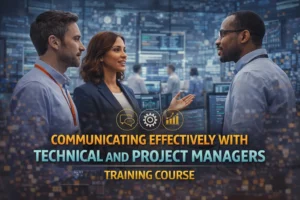


Communicating Effectively with Technical and Project Managers Training Course

Formats  Live Virtual: 8 hrs./2 Days  |  In-Person: 12 hrs./2 Days

Communicating Effectively with Technical and Project Managers equips participants with the skills to communicate clearly, ask the right questions, and collaborate effectively within project environments. Participants will learn how project managers plan and manage work, how to tailor communication for technical audiences, and how to provide meaningful updates and documentation. The course also focuses on identifying risks, escalating issues constructively, and navigating common project constraints. By the end, participants will be able to communicate with greater clarity, improve collaboration, and contribute more effectively to project success.

Learning Objectives

  • Understand project planning, roles, and constraints.
  • Communicate clearly with technical and project teams.
  • Ask effective questions to uncover risks and priorities.
  • Provide clear updates and documentation.
  • Escalate issues constructively.
  • Collaborate effectively across teams.

Course Agenda »

Understanding the Project Environment

  1. How Project Managers Plan
  2. Common Project Constraints
  3. Roles with Technical and Project Teams
  4. Workflows and Dependencies

Plans, Timelines, Work Communication

  1. Technical vs. Non-Technical
  2. Timelines, Milestones, Dependencies
  3. Trade-offs (Time vs. Cost vs. Scope)
  4. Translating Technical Plans

Asking Questions that Drive Progress

  1. Types of Questions That Drive Clarity
  2. Risks, Dependencies, and Priorities
  3. Clarifying Requirements & Expectations
  4. Listening for What’s Missing

Clear Updates and Documentation

  1. Update Needs for Decision-Makers
  2. Clarity on Risks, Issues, and Changes
  3. Documenting Information for Clarity
  4. Keeping Stakeholders Informed

Managing Issues and Escalations

  1. Handling Misalignment
  2. When Information Is Incomplete
  3. Effective Escalation Messages
  4. Presenting Problems with Solutions
  5. Maintaining Professionalism

Collaboration Across Teams

  1. Technical and Cross-Functional Teams
  2. Building Trust and Credibility
  3. Aligning Priorities Across Stakeholders
  4. Strategies for Ongoing Collaboration

Action Planning and Application

  1. Identifying Communication Gaps
  2. Tools and Techniques to Real Scenarios
  3. Personal Communication Action Plan

Communicating Effectively with Technical and Project Managers Training Course

Formats  Live Virtual: 8 hrs./2 Days  |  In-Person: 12 hrs./2 Days

Communicating Effectively with Technical and Project Managers equips participants with the skills to communicate clearly, ask the right questions, and collaborate effectively within project environments. Participants will learn how project managers plan and manage work, how to tailor communication for technical audiences, and how to provide meaningful updates and documentation. The course also focuses on identifying risks, escalating issues constructively, and navigating common project constraints. By the end, participants will be able to communicate with greater clarity, improve collaboration, and contribute more effectively to project success.

Learning Objectives

  • Understand project planning, roles, and constraints.
  • Communicate clearly with technical and project teams.
  • Ask effective questions to uncover risks and priorities.
  • Provide clear updates and documentation.
  • Escalate issues constructively.
  • Collaborate effectively across teams.

Course Agenda »

Understanding the Project Environment

  1. How Project Managers Plan
  2. Common Project Constraints
  3. Roles with Technical and Project Teams
  4. Workflows and Dependencies

Plans, Timelines, Work Communication

  1. Technical vs. Non-Technical
  2. Timelines, Milestones, Dependencies
  3. Trade-offs (Time vs. Cost vs. Scope)
  4. Translating Technical Plans

Asking Questions that Drive Progress

  1. Types of Questions That Drive Clarity
  2. Risks, Dependencies, and Priorities
  3. Clarifying Requirements & Expectations
  4. Listening for What’s Missing

Clear Updates and Documentation

  1. Update Needs for Decision-Makers
  2. Clarity on Risks, Issues, and Changes
  3. Documenting Information for Clarity
  4. Keeping Stakeholders Informed

Managing Issues and Escalations

  1. Handling Misalignment
  2. When Information Is Incomplete
  3. Effective Escalation Messages
  4. Presenting Problems with Solutions
  5. Maintaining Professionalism

Collaboration Across Teams

  1. Technical and Cross-Functional Teams
  2. Building Trust and Credibility
  3. Aligning Priorities Across Stakeholders
  4. Strategies for Ongoing Collaboration

Action Planning and Application

  1. Identifying Communication Gaps
  2. Tools and Techniques to Real Scenarios
  3. Personal Communication Action Plan