
Customer Service and Business Revenue: Why the Link Matters
Customer service and business revenue are closely connected because customer decisions are rarely based on price or product alone. How customers are treated before, during, and after a purchase often determines whether they return.
Research from Bain & Company shows that increasing customer retention by just 5% can raise profits by 25% to 95%. At the same time, PwC reports that nearly one-third of customers will leave a brand after a single poor experience. These numbers highlight a clear truth: strong customer service protects revenue, while poor service quietly erodes it.
When organizations invest in service quality, they reduce churn, increase lifetime value, and build trust. Over time, this trust turns into repeat purchases, referrals, and long-term growth.
How Customer Service Drives Revenue Over Time?
Customer service drives revenue in both direct and indirect ways. Directly, positive experiences encourage customers to buy again, upgrade services, or explore additional offerings. Indirectly, great service strengthens reputation and word-of-mouth, which brings in new customers at a lower acquisition cost.
Harvard Business Review notes that acquiring new customers can cost five to twenty-five times more than retaining existing ones. That gap explains why organizations that prioritize service consistency often outperform competitors in profitability.
Improving customer service experience is not about creating scripted interactions. It is about building reliable systems, empowered teams, and customer-focused habits that consistently deliver value.
10 Ways to Improve Customer Service That Support Revenue Growth
Below are 10 ways to improve customer service that directly support long-term revenue growth. Each approach focuses on consistency, trust, and customer experience—factors that strongly influence buying behavior.
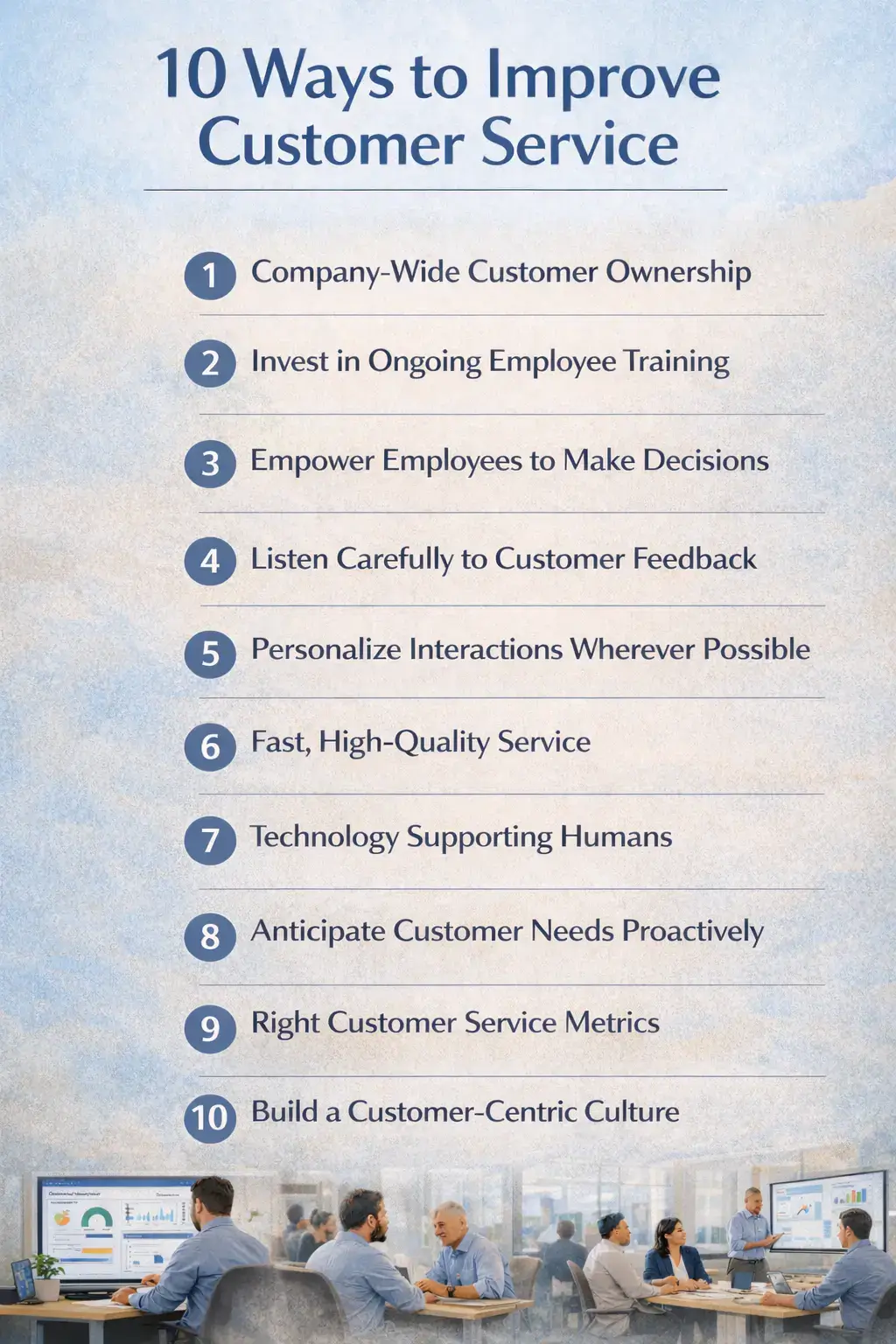
1. Company-Wide Customer Ownership
Customer service does not begin and end with a support team. Sales, operations, marketing, and leadership all influence the customer experience. When service is viewed as a shared responsibility, customers receive more consistent and reliable interactions across the organization.
2. Invest in Ongoing Employee Training
Well-trained employees are essential to improving customer service experience. According to Gallup, companies with engaged employees see higher customer loyalty and stronger profitability. Training should focus not only on processes but also on communication, empathy, and problem-solving.
Programs like this help teams understand how their behaviors and decisions shape customer perceptions and long-term results.
3. Empower Employees to Make Decisions
Customers value quick resolutions. When employees are trusted to make reasonable decisions without excessive approvals, issues are resolved faster and with less frustration. Empowerment also increases employee confidence, which customers immediately sense.
4. Listen Carefully to Customer Feedback
Customer feedback provides direct insight into what is working and what is not. Microsoft reports that most consumers view brands more favorably when they actively seek and act on feedback. Listening alone is not enough; visible follow-through builds credibility and trust.
5. Personalize Interactions Wherever Possible
Personalization plays a major role in improving customer service experience. McKinsey research shows that most customers expect personalized interactions and become frustrated when those expectations are not met. Simple actions—such as remembering preferences or acknowledging past issues—can significantly improve satisfaction.
6. Fast, High-Quality Service
Fast service matters, but speed should never replace accuracy or care. Customers appreciate timely responses that actually solve their problems. Finding the balance between efficiency and quality is key to maintaining trust and loyalty.
7. Technology Supporting Humans
Technology can streamline service delivery, but it should enhance—not eliminate—the human element. CRM platforms, analytics tools, and chat support systems help teams respond more effectively while maintaining personal connections.
8. Anticipate Customer Needs Proactively
One of the most effective ways to improve customer service is to anticipate issues before customers raise them. Proactive communication, updates, and solutions show customers that their time and experience are valued.
9. Right Customer Service Metrics
Understanding how customer service drives revenue requires tracking meaningful metrics. Customer satisfaction, retention rates, and repeat purchase behavior reveal whether service improvements are translating into business results.
10. Build a Customer-Centric Culture
Long-term improvement happens when customer focus becomes part of organizational culture. Leadership behavior, internal communication, and recognition systems should all reinforce the importance of serving customers well.
The Ripple Effect on Business Revenue
Improving customer service creates a ripple effect that extends far beyond individual interactions. When customers consistently receive thoughtful, reliable service, they are more likely to return, spend more over time, and recommend your business to others.
Satisfied customers often become loyal advocates. Their repeat purchases increase customer lifetime value, while referrals reduce the cost of acquiring new customers. Over time, this positive cycle strengthens brand reputation and helps businesses stand out in competitive markets.
Investing in customer service is not simply an operational expense—it is a long-term growth strategy. Organizations that prioritize service excellence see higher satisfaction, stronger loyalty, and more predictable revenue. The cumulative impact of these improvements directly supports sustainable business success.
Conclusion
Customer service is no longer just about resolving issues—it is a strategic driver of growth. When organizations focus on improving how customers are treated at every touchpoint, the impact shows up in loyalty, reputation, and long-term revenue. By applying these 10 ways to improve customer service, businesses can create experiences that feel consistent, personal, and valuable—earning customer trust and turning everyday interactions into lasting competitive advantage.
Turn Customer Service Into a Growth Strategy
Improving customer service does not happen by chance. It requires clear strategy, skilled teams, and a shared commitment to delivering meaningful experiences.
If your organization is ready to strengthen customer relationships and drive measurable revenue growth, investing in structured training and development can make the difference. PTR Training programs, such as Breakthrough Customer Experience, help teams connect everyday service behaviors to business outcomes—equipping employees to deliver consistent, customer-focused experiences that build trust and support long-term growth.
Frequently Asked Questions
1. How does customer service drive business revenue?
Customer service drives revenue by increasing customer retention, encouraging repeat purchases, and generating referrals. Positive experiences build trust, which leads customers to spend more and stay longer.
2. What is the most effective way to improve customer service?
The most effective improvements combine employee training, empowerment, and consistent processes. When teams are confident and supported, service quality improves naturally.
3. Why is customer service important for business growth?
Customer service influences loyalty, reputation, and lifetime value. Businesses that deliver strong experiences retain customers longer and grow more sustainably.
4. How can companies measure customer service success?
Key metrics include customer satisfaction scores, retention rates, repeat purchase behavior, and feedback trends. These indicators show whether service improvements are impacting revenue.
5. Can customer service really be a competitive advantage?
Yes. In markets where products and pricing are similar, customer experience often becomes the deciding factor. Exceptional service helps businesses stand out and build lasting relationships.