
7 Effective Career Development Strategies for Employees

Jason Hicks

Jason Hicks

Owner at PTR Training

Career Development Strategies for Employees

Career growth does not happen by chance. It happens when you take clear, consistent steps toward improving your skills, expanding your experience, and aligning your work with long-term goals.

Relying only on experience is not enough. You need a structured approach to grow, adapt, and stay competitive. That is where career development strategies for employees become essential.

Whether you are early in your career or looking to move into leadership, the right strategies can help you move forward with confidence and clarity.

What Is Career Development for Employees?

Career development is the process of improving your skills, knowledge, and experience to achieve your professional goals.

It includes learning new abilities, gaining experience, building relationships, and preparing for future opportunities. Employee career development is not limited to promotions. It is about continuous improvement and long-term growth.

According to LinkedIn’s Workplace Learning Report, 94% of employees say they would stay longer at a company that invests in their career development. This shows how important growth opportunities are for both employees and organizations.

Why Career Development Matters Today

New technologies, changing roles, and increasing competition make continuous learning essential.

A report by McKinsey highlights that many organizations are already facing skill gaps or expect them in the near future. This means employees who actively develop their skills are more likely to stay relevant and adaptable.

Career development also plays a key role in motivation and long-term performance. When you see progress in your skills and responsibilities, you are more likely to stay focused, confident, and committed to your work.

Career growth is no longer optional. It is a practical way to stay prepared for change and build long-term stability in your professional journey.

7 Effective Career Development Strategies for Employees

If you want to grow professionally, focus on practical strategies you can apply consistently. These are not one-time actions. They are habits that build over time.
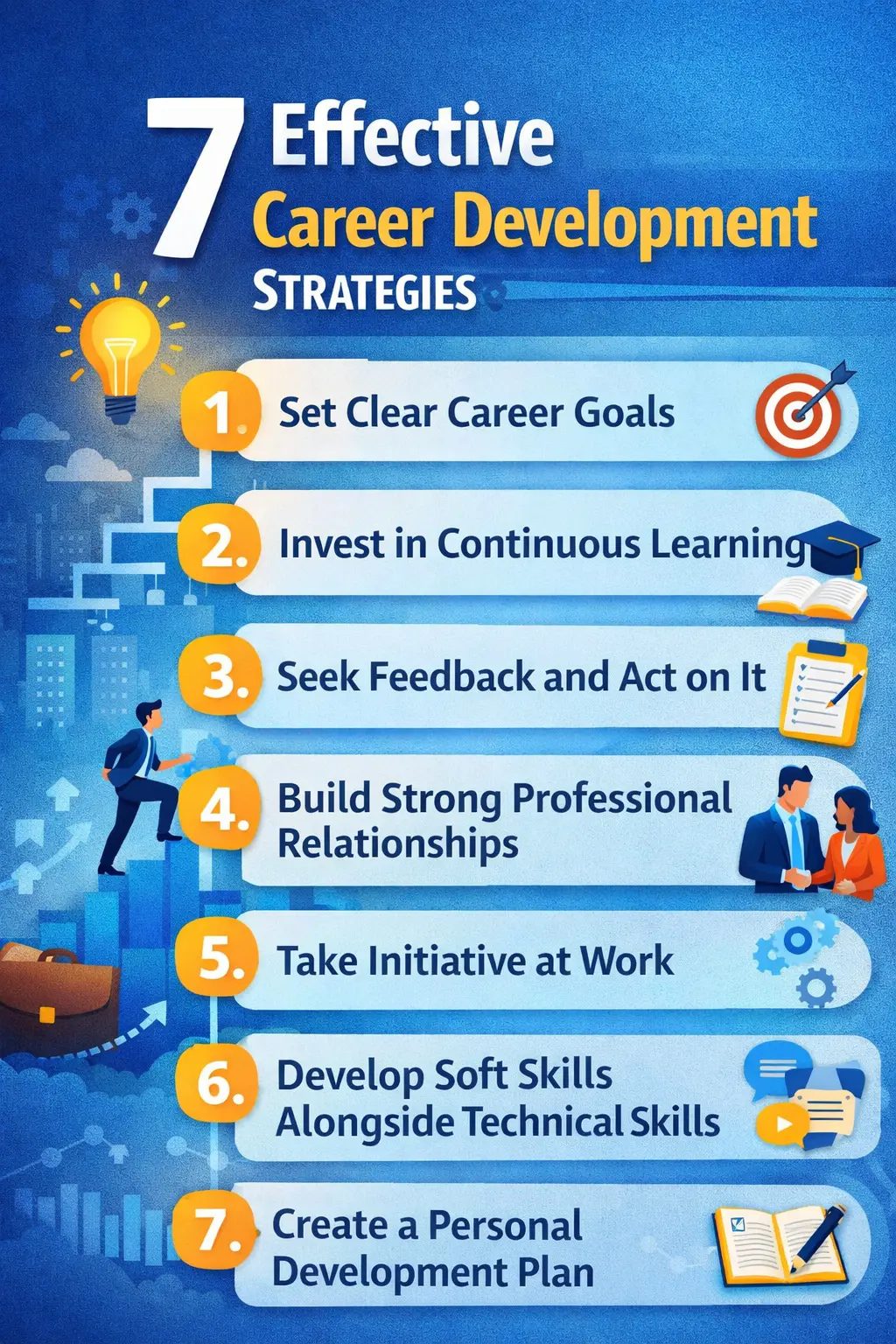
1. Set Clear Career Goals

You cannot grow if you are not sure where you are going. Start by identifying what success looks like for you in both the short term and long term.

Break your goals into smaller, actionable steps. This helps you track progress and make better career decisions. Clear goals also make it easier to choose the right opportunities, avoid distractions, and move forward with confidence in your career path.

2. Invest in Continuous Learning

One of the most effective career development strategies is ongoing learning.

This can include online courses, certifications, workshops, or even learning through hands-on experience at work. The goal is to keep improving your knowledge in areas that support your role and future goals.

Focus on skills that match industry trends and your career direction. When you continue learning, you stay adaptable, improve your performance, and increase your chances of growth within your organization.

3. Seek Feedback and Act on It

Feedback helps you understand how others see your work and where you can improve. Instead of waiting for formal reviews, ask for feedback regularly from your manager or colleagues.

The key is to act on what you learn. Use feedback to improve your performance, adjust your approach, and avoid repeating mistakes. This shows maturity, willingness to grow, and a strong commitment to your professional development.

4. Build Strong Professional Relationships

Your network plays a major role in your career growth.

Building relationships with colleagues, mentors, and industry professionals can open doors to new opportunities. It also gives you access to insights, advice, and support.

These relationships expose you to different perspectives and opportunities you might not discover on your own.

Many job opportunities are influenced by professional connections and referrals, which makes relationship-building one of the most valuable career development strategies. That makes relationship-building one of the most valuable career development strategies.

Ready to develop your team? Explore PTR’s professional development training programs or contact us today to start building a more capable, confident workforce.

5. Take Initiative at Work

Career growth often comes from doing more than what is expected. Look for opportunities where you can contribute beyond your regular responsibilities.

This could include solving problems, suggesting improvements, or volunteering for new tasks. Taking initiative shows that you are proactive and dependable. It also helps you gain new experience, build confidence, and stand out within your team or organization.

6. Develop Soft Skills Alongside Technical Skills

Technical skills are important, but soft skills often determine how far you grow in your career. Skills like communication, teamwork, adaptability, and problem-solving help you work effectively with others.

Strong soft skills improve how you handle challenges, manage responsibilities, and interact with colleagues. They also play a key role in leadership development and long-term career advancement.

7. Create a Personal Development Plan

A personal development plan helps you stay organized and focused on your growth. It gives you a clear roadmap for what you want to achieve and how you plan to get there.

Include your goals, the skills you need to build, and a timeline for progress. Review your plan regularly and update it as your career evolves. This keeps your development structured and aligned with your long-term objectives.

Frequently Asked Questions

What are career development strategies for employees?

Career development strategies are structured approaches that help employees grow skills, achieve goals, and advance professionally through training, mentorship, and performance planning.

Why is employee career development important?

It helps employees stay motivated, improves retention, and supports better performance. When people see growth opportunities, they are more engaged and committed to their work.

How can employees improve their career development?

Employees can improve their development by identifying skill gaps, creating a learning plan, and applying new knowledge at work. Regular feedback and self-reflection also help improve long-term growth.

What are the best career development tips for employees?

Focus on continuous learning, seek feedback, set clear goals, and build strong professional relationships. These steps help accelerate career growth effectively.

What skills are most important for career growth?

Both technical and soft skills are important. Communication, problem-solving, adaptability, and leadership skills are especially valuable for long-term career success.

Conclusion

Career growth is not something that happens automatically. It is built through consistent effort, smart decisions, and a willingness to improve.

By following these effective career development strategies, you can take control of your professional journey. Whether it is learning new skills, building relationships, or setting clear goals, each step brings you closer to long-term success.

The key is to stay consistent, take action, and actively shape your career path over time.

Build Stronger Careers with the Right Training Partner

Career development doesn’t happen by chance—it requires the right structure, guidance, and support. This is where the right training partner can make a meaningful difference.

With over 20 years of experience and 550,000+ professionals trained, PTR helps organizations turn career development strategies into real, measurable outcomes.

Why organizations choose PTR:

  • Practical, results-driven training programs
  • 275+ topics covering leadership, analytics, and workplace skills
  • Expert instructors with real-world experience
  • Flexible delivery: virtual or onsite
  • Proven ROI-focused learning approach

Whether you're looking to strengthen employee performance, improve retention, or build future-ready teams, PTR delivers targeted training programs that drive real workplace results.

Start building a stronger, more capable workforce today.

Jason Hicks

Jason Hicks

Owner at PTR Training

LinkedIn

As Owner of PTR Training, Jason Hicks leads the company’s strategic direction and oversees the development of performance-based training solutions for organizations and professionals. With a background grounded in both education and applied practice, Jason combines formal training in human performance and leadership with extensive real-world experience designing, delivering, and scaling training programs. He is known for translating complex performance concepts into practical, results-driven solutions that improve individual capability and organizational outcomes.

You May Also Like

Learning & DevelopmentWorkplace Wellness
Career Development Strategies for Employees

7 Effective Career Development Strategies for Employees

Career Development Strategies for Employees

Career growth does not happen by chance. It happens when you take clear, consistent steps toward improving your skills, expanding your experience, and aligning your work with long-term goals.

Relying only on experience is not enough. You need a structured approach to grow, adapt, and stay competitive. That is where career development strategies for employees become essential.

Whether you are early in your career or looking to move into leadership, the right strategies can help you move forward with confidence and clarity.

What Is Career Development for Employees?

Career development is the process of improving your skills, knowledge, and experience to achieve your professional goals.

It includes learning new abilities, gaining experience, building relationships, and preparing for future opportunities. Employee career development is not limited to promotions. It is about continuous improvement and long-term growth.

According to LinkedIn’s Workplace Learning Report, 94% of employees say they would stay longer at a company that invests in their career development. This shows how important growth opportunities are for both employees and organizations.

Why Career Development Matters Today

New technologies, changing roles, and increasing competition make continuous learning essential.

A report by McKinsey highlights that many organizations are already facing skill gaps or expect them in the near future. This means employees who actively develop their skills are more likely to stay relevant and adaptable.

Career development also plays a key role in motivation and long-term performance. When you see progress in your skills and responsibilities, you are more likely to stay focused, confident, and committed to your work.

Career growth is no longer optional. It is a practical way to stay prepared for change and build long-term stability in your professional journey.

7 Effective Career Development Strategies for Employees

If you want to grow professionally, focus on practical strategies you can apply consistently. These are not one-time actions. They are habits that build over time.

1. Set Clear Career Goals

You cannot grow if you are not sure where you are going. Start by identifying what success looks like for you in both the short term and long term.

Break your goals into smaller, actionable steps. This helps you track progress and make better career decisions. Clear goals also make it easier to choose the right opportunities, avoid distractions, and move forward with confidence in your career path.

2. Invest in Continuous Learning

One of the most effective career development strategies is ongoing learning.

This can include online courses, certifications, workshops, or even learning through hands-on experience at work. The goal is to keep improving your knowledge in areas that support your role and future goals.

Focus on skills that match industry trends and your career direction. When you continue learning, you stay adaptable, improve your performance, and increase your chances of growth within your organization.

3. Seek Feedback and Act on It

Feedback helps you understand how others see your work and where you can improve. Instead of waiting for formal reviews, ask for feedback regularly from your manager or colleagues.

The key is to act on what you learn. Use feedback to improve your performance, adjust your approach, and avoid repeating mistakes. This shows maturity, willingness to grow, and a strong commitment to your professional development.

4. Build Strong Professional Relationships

Your network plays a major role in your career growth.

Building relationships with colleagues, mentors, and industry professionals can open doors to new opportunities. It also gives you access to insights, advice, and support.

These relationships expose you to different perspectives and opportunities you might not discover on your own.

Many job opportunities are influenced by professional connections and referrals, which makes relationship-building one of the most valuable career development strategies. That makes relationship-building one of the most valuable career development strategies.

Ready to develop your team? Explore PTR’s professional development training programs or contact us today to start building a more capable, confident workforce.

5. Take Initiative at Work

Career growth often comes from doing more than what is expected. Look for opportunities where you can contribute beyond your regular responsibilities.

This could include solving problems, suggesting improvements, or volunteering for new tasks. Taking initiative shows that you are proactive and dependable. It also helps you gain new experience, build confidence, and stand out within your team or organization.

6. Develop Soft Skills Alongside Technical Skills

Technical skills are important, but soft skills often determine how far you grow in your career. Skills like communication, teamwork, adaptability, and problem-solving help you work effectively with others.

Strong soft skills improve how you handle challenges, manage responsibilities, and interact with colleagues. They also play a key role in leadership development and long-term career advancement.

7. Create a Personal Development Plan

A personal development plan helps you stay organized and focused on your growth. It gives you a clear roadmap for what you want to achieve and how you plan to get there.

Include your goals, the skills you need to build, and a timeline for progress. Review your plan regularly and update it as your career evolves. This keeps your development structured and aligned with your long-term objectives.

Frequently Asked Questions

What are career development strategies for employees?

Career development strategies are structured approaches that help employees grow skills, achieve goals, and advance professionally through training, mentorship, and performance planning.

Why is employee career development important?

It helps employees stay motivated, improves retention, and supports better performance. When people see growth opportunities, they are more engaged and committed to their work.

How can employees improve their career development?

Employees can improve their development by identifying skill gaps, creating a learning plan, and applying new knowledge at work. Regular feedback and self-reflection also help improve long-term growth.

What are the best career development tips for employees?

Focus on continuous learning, seek feedback, set clear goals, and build strong professional relationships. These steps help accelerate career growth effectively.

What skills are most important for career growth?

Both technical and soft skills are important. Communication, problem-solving, adaptability, and leadership skills are especially valuable for long-term career success.

Conclusion

Career growth is not something that happens automatically. It is built through consistent effort, smart decisions, and a willingness to improve.

By following these effective career development strategies, you can take control of your professional journey. Whether it is learning new skills, building relationships, or setting clear goals, each step brings you closer to long-term success.

The key is to stay consistent, take action, and actively shape your career path over time.

Build Stronger Careers with the Right Training Partner

Career development doesn’t happen by chance—it requires the right structure, guidance, and support. This is where the right training partner can make a meaningful difference.

With over 20 years of experience and 550,000+ professionals trained, PTR helps organizations turn career development strategies into real, measurable outcomes.

Why organizations choose PTR:

  • Practical, results-driven training programs
  • 275+ topics covering leadership, analytics, and workplace skills
  • Expert instructors with real-world experience
  • Flexible delivery: virtual or onsite
  • Proven ROI-focused learning approach

Whether you're looking to strengthen employee performance, improve retention, or build future-ready teams, PTR delivers targeted training programs that drive real workplace results.

Start building a stronger, more capable workforce today.