
Leadership has changed — dramatically. Organizations now face a whirlwind of global uncertainty: shifting markets, rapid technological disruption, evolving workforce expectations, and unexpected crises. In such a world, technical expertise or a good plan isn’t enough. What sets successful leaders apart is resilience: the ability to adapt, recover, and lead through turbulence.
Resilience in leadership isn’t about being unshakable or immune to stress. It’s about bouncing back faster, staying composed under pressure, and guiding teams with clarity when uncertainty looms. Leaders who embody resilience don’t just survive disruption — they turn it into growth.
In fact, resilient organizations weather change more effectively, and leadership plays a critical role in building that organizational resilience. In an era where even mental health impacts productivity, resilient leadership has never been more important.
What Is Resilience in Leadership?
Resilience in leadership is the ability to adapt, stay composed, and continue leading effectively when circumstances become difficult or unpredictable. It’s not about avoiding challenges—it’s about responding to them in a way that keeps the team grounded and moving forward.
A resilient leader maintains clarity under pressure, makes thoughtful decisions even during uncertainty, and guides others through setbacks without losing momentum. This resilience is a blend of emotional strength, problem-solving skills, and the capacity to recover quickly from unexpected changes.
In practical terms, resilient leadership looks like:
- Staying calm when plans fall apart
- Taking responsibility instead of shifting blame
- Turning obstacles into learning opportunities
- Encouraging confidence and stability within the team
Today’s workplace is marked by constant change—technology disruption, shifting workforce demands, and economic unpredictability. Research from Deloitte indicates that adaptability and resilience are among the top leadership traits required for modern organizations. This shows that resilience is no longer optional—it’s a core competency.
Why Is Resilience Important in Leadership?
Resilience is vital in leadership because it ensures stability, growth, and clear direction regardless of external pressures. The ability to lead effectively is tested most during moments of crisis—not when everything is going well.
Here’s why resilience matters so much:
1. Challenges Are Unavoidable
Economic downturns, industry changes, team conflicts, and unexpected failures will always occur. Resilient leaders navigate these realities without losing confidence or clarity.
2. People Follow Leaders Who Stay Grounded
Employees are more likely to trust and follow leaders who remain composed during stressful situations. A resilient leader becomes the “anchor” that keeps everyone steady.
3. It Ensures Long-Term Success
Short-term wins can happen without resilience, but long-term success requires leaders who can adapt to change and sustain performance over time.
4. It Encourages a Growth Mindset
Resilient leaders normalize learning from setbacks rather than fearing them. This mindset influences the whole organization, leading to continuous development.
5. It Builds a Healthy, High-Performing Culture
Organizations with resilient leaders generally have teams that communicate better, collaborate more openly, and support one another during challenges.
According to a PwC survey, 70% of executives say resilience is essential for long-term organizational success—reinforcing the idea that leadership resilience directly impacts performance, culture, and competitiveness.
What Resilient Leadership Looks Like in Practice?
Effective Crisis Management & Decision Making
Resilient leaders maintain clarity under pressure. Instead of reacting defensively, they analyze, adapt, and make informed decisions even when the situation is chaotic. Their calmness and pragmatism help set direction and build confidence among teams.
Building Psychological Safety & Trust
When leaders manage stress well and remain approachable, employees feel safe to speak up, admit mistakes, or raise concerns. This trust fuels innovation, supports open communication, and reduces fear-driven silence — a key benefit of resilience in leadership.
Maintaining Long-Term Vision While Navigating Short-Term Change
Markets shift fast. Regulations evolve. Teams change. Resilient leaders keep their eyes on long-term goals while adjusting tactics as needed. This balance ensures stability and progress, even in uncertain times.
Encouraging Growth Through Setbacks
Instead of hiding from failure, resilient leaders frame setbacks as learning opportunities. Mistakes are reviewed, lessons extracted, and improvements made — fostering a culture of continuous learning rather than blame.
How Leaders Can Build Resilience: Practical Strategies
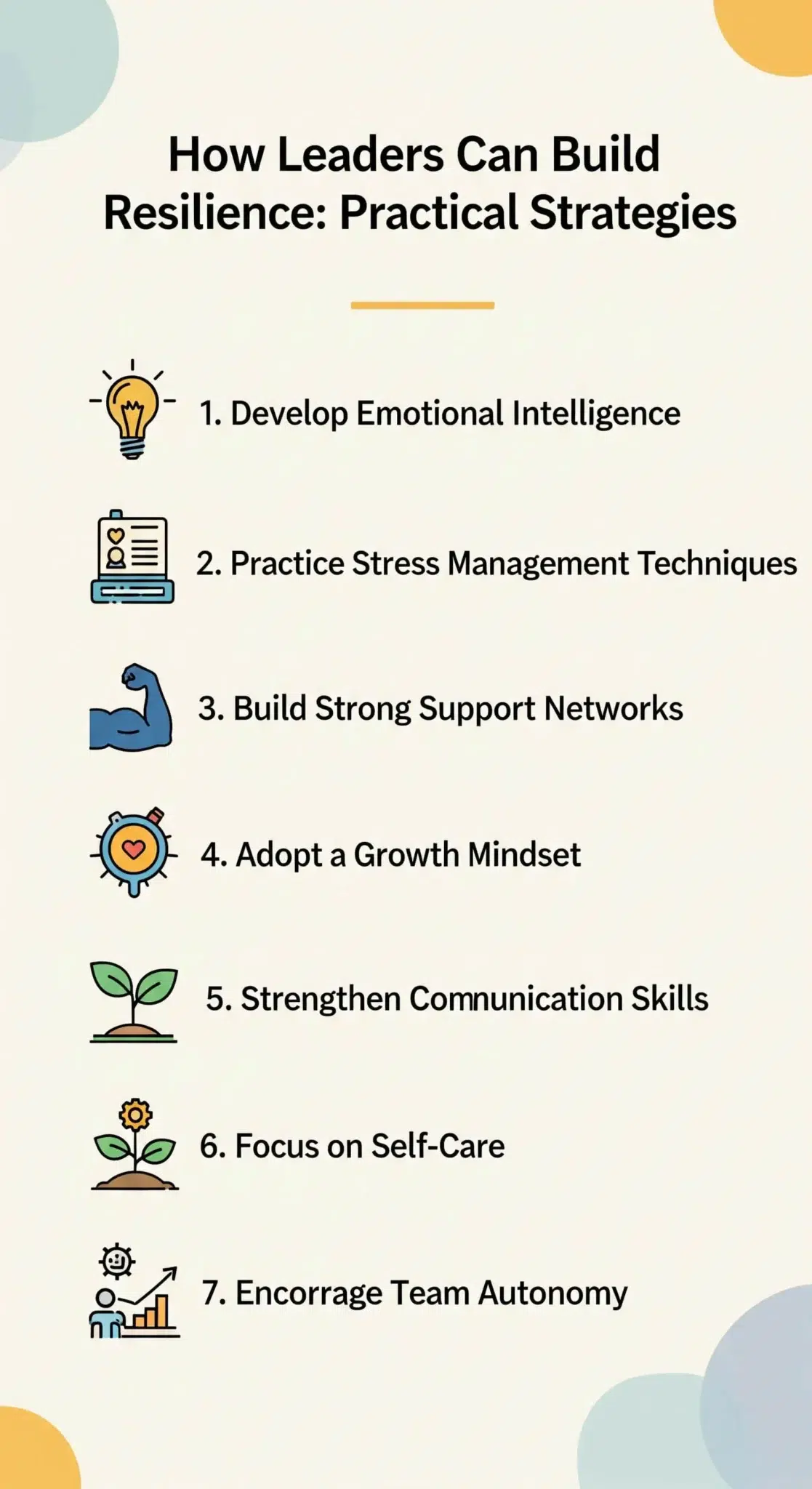
1. Develop Emotional Intelligence
Practice self-awareness, empathy, active listening, and calm communication — especially in difficult times.
2. Practice Stress Management Techniques
Such as:
- Mindfulness
- Journaling
- Breathing techniques
- Physical exercise
- Structured reflection
These help leaders stay centered.
3. Build Strong Support Networks
Resilient leaders don’t do everything alone.
Professional networks improve problem-solving and reduce stress.
4. Adopt a Growth Mindset
Challenges should be seen as opportunities.
Regular learning prevents stagnation and supports faster adaptation.
5. Strengthen Communication Skills
Transparent leadership reduces fear and uncertainty.
Consistent communication builds stability.
6. Focus on Self-Care
Good sleep, nutrition, and rest directly improve resilience and cognitive performance.
7. Encourage Team Autonomy
Empowered teams help leaders reduce workload and navigate disruptions faster.
How Resilient Leadership Benefits Organizations?
Resilient leadership creates a positive ripple effect across the entire organization. Leaders who demonstrate emotional steadiness, adaptability, and clear decision-making help the company navigate challenges with confidence and protect long-term performance.
Here are the most important benefits:
1. Stronger Team Performance and Morale
Teams look to leaders for stability. When leaders respond to challenges with clarity and assurance, employees feel more secure and engaged. This improves productivity and reduces workplace anxiety during transitions or crises.
2. Better Decision-Making During Uncertainty
Resilient leaders avoid reactive choices. They pause, evaluate, and make informed decisions even under pressure. This reduces costly mistakes and helps organizations maintain direction during volatile periods.
3. Faster Recovery From Setbacks
Every business faces disruption—whether operational failures, market shifts, or unexpected internal challenges. Resilient leaders help their teams recover faster because they focus on solutions, not the problem.
4. Greater Innovation and Adaptability
Resilience encourages experimentation. Leaders who are not threatened by failure create a culture where employees can take smart risks, think creatively, and challenge old methods—resulting in continuous improvement.
5. Reduced Employee Burnout and Turnover
Calm, adaptive leaders help create psychologically safe workplaces. Employees feel supported rather than stressed, lowering burnout levels and reducing turnover—a major advantage in an increasingly competitive talent market.
Conclusion
Resilience in leadership is no longer optional — it is a defining factor of organizational success. In a world filled with unexpected challenges, shifting workplace cultures, technological disruption, and global uncertainties, leaders must be stable anchors for their teams.
Understanding the importance of resilience in leadership goes beyond personal well-being. It affects:
- Strategy
- Productivity
- Innovation
- Employee morale
- Long-term business growth
If you want to become a future-ready leader, resilience is your starting point — and your most powerful competitive edge.
Build Resilient Leaders for a Stronger, Future-Ready Organization
Resilient leadership isn’t just a personal strength — it’s a strategic advantage. If your organization wants to enhance decision-making, reduce burnout, improve team performance, and prepare leaders for uncertainty, now is the time to invest in resilience training.
Ready to develop resilient, high-impact leaders who can navigate change with confidence?
Contact us today to learn how our leadership and management training courses can strengthen resilience across all levels of your organization.
Frequently Asked Questions
1. What challenges commonly test a leader’s resilience?
Leaders often face challenges such as organizational restructuring, high-pressure deadlines, team conflicts, market uncertainty, technological change, and unexpected crises. How leaders respond to these pressure points determines their resilience level.
2. How does resilience influence a leader’s decision-making ability?
Resilience helps leaders think clearly during high-stress situations. Instead of reacting emotionally, resilient leaders evaluate options objectively, consider long-term implications, and make balanced decisions—even when facing uncertainty or limited information.
3. How does resilient leadership reduce employee burnout?
Resilient leaders model calm behavior, communicate transparently, and provide clarity during change. This stabilizes teams, reduces stress levels, and creates psychologically safe environments—significantly lowering the risk of burnout and turnover.
4. What are signs that a leader is resilient?
Common indicators include staying calm during challenges, taking responsibility rather than shifting blame, encouraging open communication, maintaining a long-term perspective, and turning setbacks into learning opportunities.
5. How can leaders build resilience in their teams?
Leaders can build resilient teams by creating psychological safety, encouraging open communication, recognizing effort, providing clear direction, promoting continuous learning, and supporting employee well-being.
6. What happens when leaders lack resilience?
Leaders who lack resilience may struggle to handle stress, make reactive decisions, increase team anxiety, contribute to burnout, or lose sight of long-term goals. This can weaken team performance and negatively affect the entire organization.