

Leadership is often discussed in terms of strategies, frameworks, and management theories. Yet the leaders who consistently build strong, high-performing teams rarely rely on theory alone. What truly sets them apart are the small habits they practice every day.
These habits shape how leaders communicate, make decisions, handle challenges, and support the people around them. Over time, these repeated behaviors influence the culture of an entire team. When leaders develop the right habits, employees become more engaged, collaboration improves, and performance begins to grow naturally.
In fact, leadership behavior has a measurable impact on team success. Managers account for at least 70% of the variance in employee engagement scores, making leadership habits one of the most important drivers of workplace performance.
The good news is that effective leadership habits are not limited to naturally gifted individuals. They can be learned, practiced, and strengthened over time.
In this article, we explore the 7 habits of successful leaders that consistently drive team growth, improve accountability, and help organizations build stronger, more motivated teams.
Why Leadership Habits Matter for Team Growth
Leadership is not defined only by decision-making or authority. It is shaped by the actions leaders consistently demonstrate in everyday situations. These small actions gradually influence the culture of a team and the way employees approach their work.
Strong leadership habits create stability and direction within teams. Employees gain clarity about expectations, feel more confident in their roles, and become more willing to collaborate.
Research highlighted by Harvard Business Review shows that organizations investing in leadership development often experience stronger employee retention and improved team performance.
When leaders adopt effective habits, they create an environment where teams can consistently improve and deliver results.
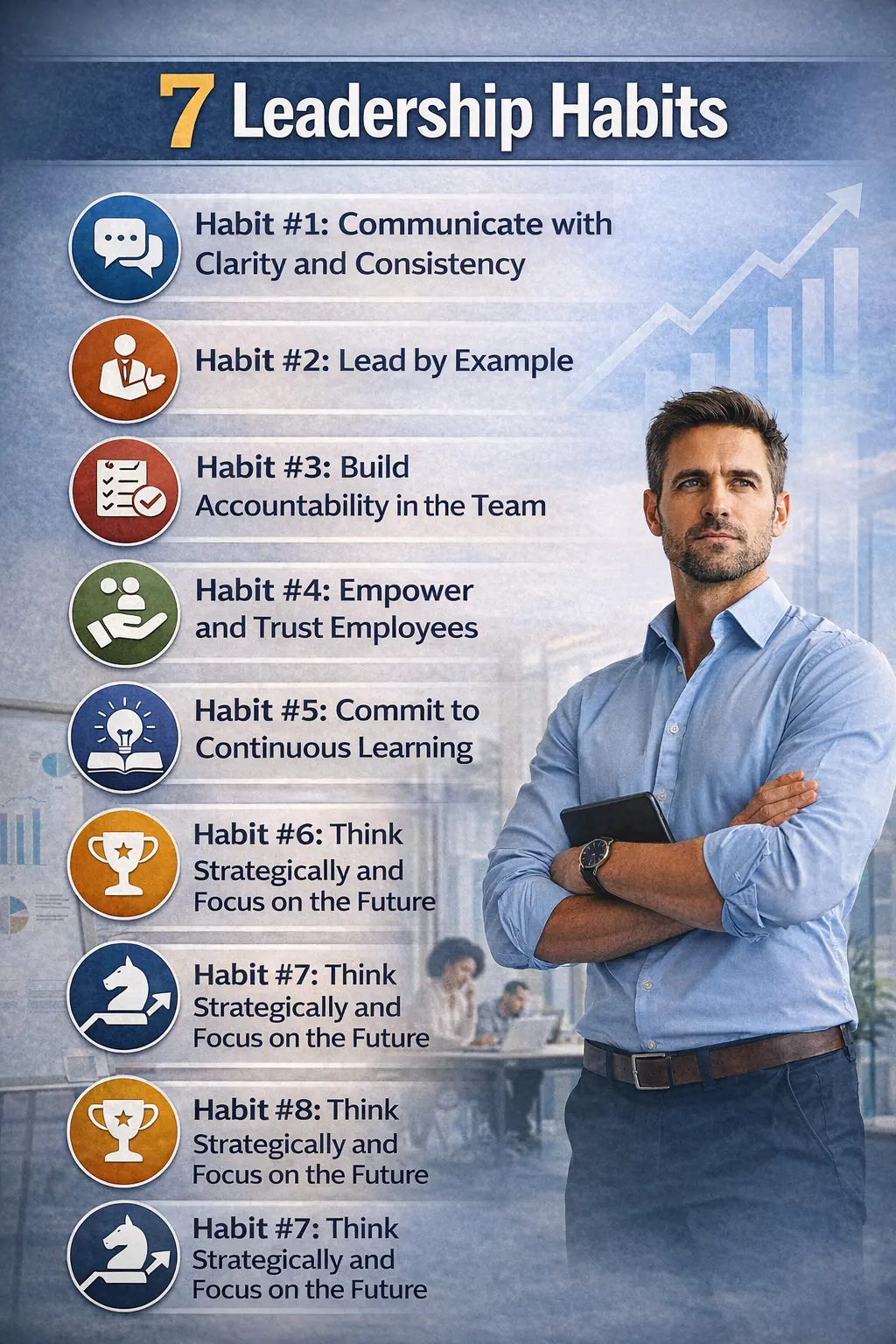
Habit #1: Communicate with Clarity and Consistency
Clear communication is one of the most important habits leaders can develop. When leaders communicate effectively, teams understand their priorities and how their work contributes to broader goals.
Poor communication often leads to confusion, duplicated work, and frustration among employees. On the other hand, consistent communication builds alignment and trust.
Successful leaders make communication a regular part of their leadership approach. They explain expectations clearly, provide updates when priorities change, and encourage employees to ask questions when needed.
Equally important is listening. Leaders who actively listen to their teams gain valuable insights about challenges, opportunities, and employee concerns. This creates a workplace where employees feel heard and respected.
Over time, clear communication strengthens relationships within the team and reduces misunderstandings that can slow down progress.
Habit #2: Lead by Example
Leadership credibility grows when actions match words. Employees naturally observe how leaders behave in different situations, especially during challenges or high-pressure moments.
Leaders who demonstrate professionalism, accountability, and integrity set the tone for the entire team. When leaders stay committed to deadlines, handle setbacks calmly, and treat colleagues respectfully, employees tend to mirror the same behaviors.
This habit becomes particularly important when organizations face uncertainty or change. Teams often look to their leaders for reassurance and direction. A leader who maintains composure and transparency can help the entire team stay focused.
Leading by example also reinforces organizational values. Instead of simply describing company culture, leaders demonstrate it through their daily actions.
Habit #3: Build Accountability in the Team
Accountability is essential for maintaining consistent performance within teams. Without clear accountability, projects may lose momentum and responsibilities can become unclear.
Effective leaders establish accountability by defining goals and regularly reviewing progress. They ensure that each team member understands their responsibilities and how their work contributes to overall results.
A culture of accountability does not rely on blame or strict control. Instead, it encourages ownership and transparency. Leaders provide feedback when improvement is needed and support employees in finding solutions.
When accountability becomes part of the team culture, employees feel responsible not only for their own work but also for the success of the entire team.
Developing strong leadership habits requires guidance and practice. If your organization is working to strengthen leadership capability, structured training can accelerate progress.
Explore leadership development programs that help managers strengthen communication, accountability, and team leadership skills.
Habit #4: Empower and Trust Employees
Empowering employees is another defining habit of successful leaders. Teams perform better when employees feel trusted to make decisions and contribute ideas.
Micromanagement often limits creativity and slows down progress. In contrast, leaders who delegate responsibility encourage employees to think independently and take initiative.
Empowerment begins with trust. Leaders provide clear direction but allow employees the flexibility to determine how tasks should be completed. This approach encourages problem-solving and innovation.
Engaged teams are typically more productive and committed to achieving organizational goals. When leaders empower their teams, they also create opportunities for employees to develop new skills and grow professionally.
Habit #5: Commit to Continuous Learning
The workplace continues to evolve as technology advances and business environments change. Leaders who remain committed to learning are better prepared to guide their teams through these changes.
Continuous learning allows leaders to refine their leadership style and expand their perspective. This habit often includes reading industry research, participating in leadership workshops, or learning from mentors and peers.
According to LinkedIn’s Workplace Learning Report, 94% of employees say they would stay longer at a company that invests in their learning and development. Leaders who prioritize learning create a culture where improvement and growth become part of everyday work.
When leaders demonstrate curiosity and openness to new ideas, teams become more adaptable and innovative.
Habit #6: Recognize and Celebrate Achievements
Recognition is a powerful motivator that many leaders overlook. Employees who feel appreciated are more likely to stay engaged and committed to their work.
Acknowledging achievements does not always require formal programs. Simple expressions of appreciation can have a meaningful impact. Recognizing contributions during meetings or sending a quick message of thanks helps employees feel valued.
Recognition also reinforces positive behaviors within teams. When leaders highlight accomplishments, employees understand what success looks like and feel motivated to maintain strong performance.
Over time, consistent recognition strengthens team morale and contributes to a supportive workplace culture.
Habit #7: Think Strategically and Focus on the Future
Successful leaders balance immediate responsibilities with long-term vision. Strategic thinking allows leaders to anticipate challenges and prepare teams for future opportunities.
Instead of focusing only on daily tasks, strategic leaders consider how current decisions affect long-term outcomes. They evaluate trends, identify potential risks, and encourage their teams to think creatively about solutions.
This forward-looking perspective helps organizations remain competitive in rapidly changing industries. Teams guided by strategic leaders often feel more confident because they understand the direction the organization is moving toward.
Strategic thinking also ensures that team efforts align with broader business goals, making everyday work more meaningful.
Strengthen Leadership Skills Across Your Organization
Building strong leadership habits takes practice, guidance, and the right learning environment. If your organization wants to develop confident managers who can lead high-performing teams, consider investing in structured leadership development programs. The right training helps leaders improve communication, accountability, and team performance while driving long-term business growth. Explore how leadership training can support your team’s success.
Frequently Asked Questions
What are the most important habits of successful leaders?
The most important habits include clear communication, accountability, empowering employees, continuous learning, recognition, strategic thinking, and leading by example. These behaviors build trust and improve team performance over time.
How do leadership habits impact team growth?
Leadership habits influence workplace culture, motivation, and productivity. When leaders demonstrate consistent positive behaviors, employees feel supported and more engaged in achieving team goals.
Can leadership habits be developed through training?
Yes. Many leadership skills can be learned through training, coaching, and real-world practice. Structured leadership development programs help managers strengthen communication, accountability, and decision-making skills.
Why is accountability important for leadership success?
Accountability ensures that goals are clearly defined and responsibilities are understood. When leaders create accountability systems, teams stay focused, track progress, and deliver consistent results.
How can leaders improve their leadership habits?
Leaders can improve their habits by seeking feedback, participating in leadership development programs, learning from mentors, and reflecting regularly on their leadership approach.