
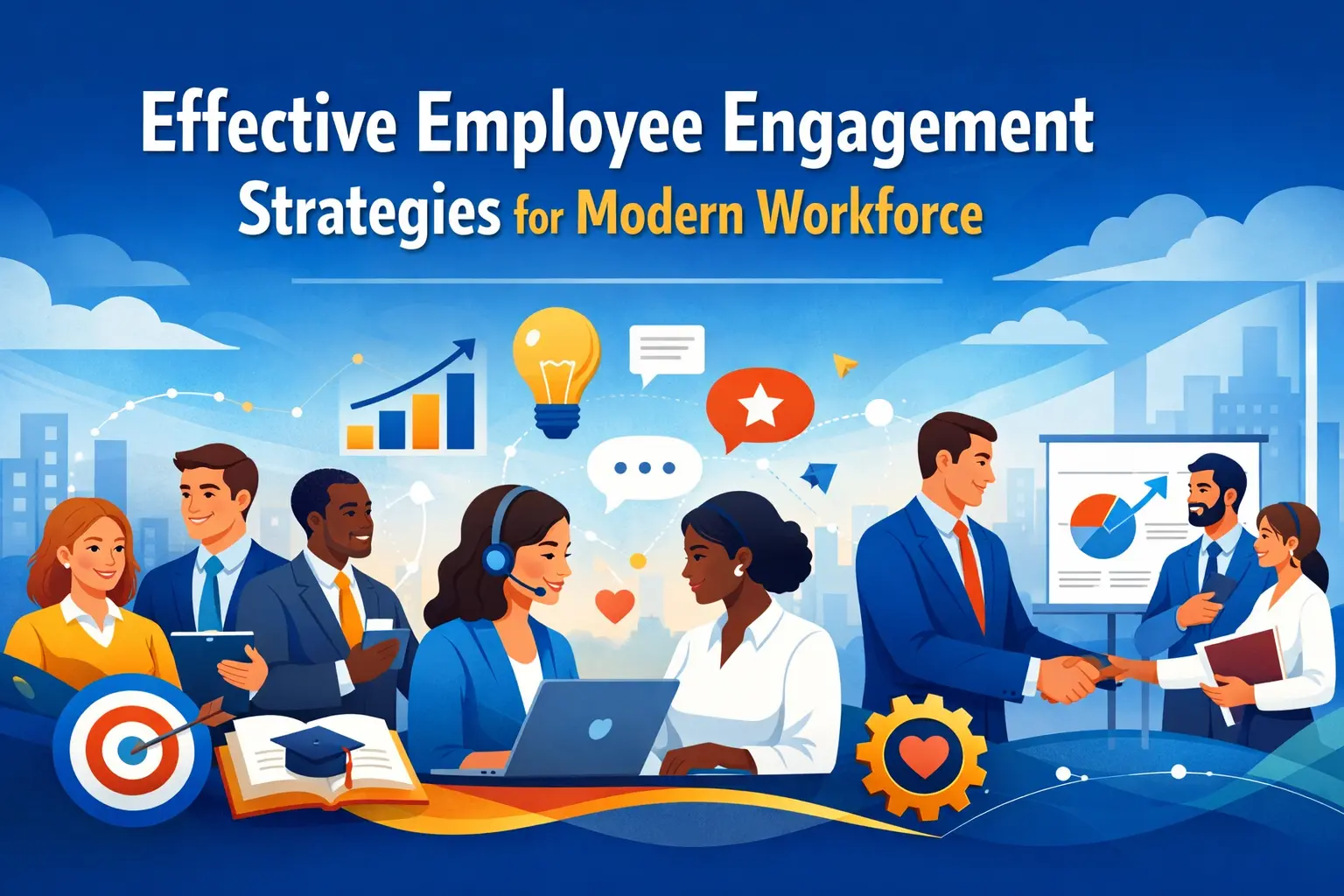
Organizations across industries are facing a common challenge: employees are physically present but not always fully engaged. In a modern workplace shaped by hybrid work models, evolving career expectations, and rapid technological change, maintaining engagement requires far more than occasional team activities or recognition programs.
Employee engagement today is closely connected to how people experience their work environment, leadership, and opportunities for growth. When employees feel connected to their work and supported by their organization, they contribute more actively, collaborate better, and remain committed during periods of change.
Companies that recognize this shift are redesigning how they manage teams, communicate goals, and develop leadership capabilities. Effective employee engagement strategies for the modern workforce are no longer optional initiatives. They are fundamental to building resilient, high-performing organizations.
Why Employee Engagement Has Become a Strategic Priority
Employee engagement has shifted from being an HR metric to becoming a key business driver. Organizations with highly engaged teams often experience stronger productivity, better customer relationships, and higher levels of innovation.
Research from the Gallup State of the Global Workplace Report indicates that highly engaged teams show 21% higher profitability and significantly lower absenteeism compared to disengaged teams.
However, engagement is not simply about employee satisfaction. An employee might feel satisfied with compensation yet still feel disconnected from their role or the organization’s goals.
True engagement happens when employees:
- Understand the purpose behind their work
- Feel their contributions are valued
- Have opportunities to grow professionally
- Trust leadership and organizational direction
Without these elements, motivation often declines over time.
What Defines the Modern Workforce
Before exploring engagement strategies, it is important to understand how the workforce itself has evolved.
Increased Demand for Meaningful Work
Employees today are more likely to evaluate their work based on purpose and impact. Many professionals want to see how their work contributes to broader organizational or societal outcomes.
When employees cannot connect their daily tasks to meaningful goals, motivation often declines.
Flexibility and Autonomy Expectations
Remote and hybrid work arrangements have changed how people approach productivity. Many employees value flexibility and autonomy more than traditional workplace structures.
Organizations that adapt to these expectations often see higher engagement levels.
Continuous Learning Mindset
Career growth is now one of the strongest drivers of employee engagement. Professionals expect opportunities to develop new skills and advance their careers.
When organizations invest in learning and development, employees are more likely to remain committed.
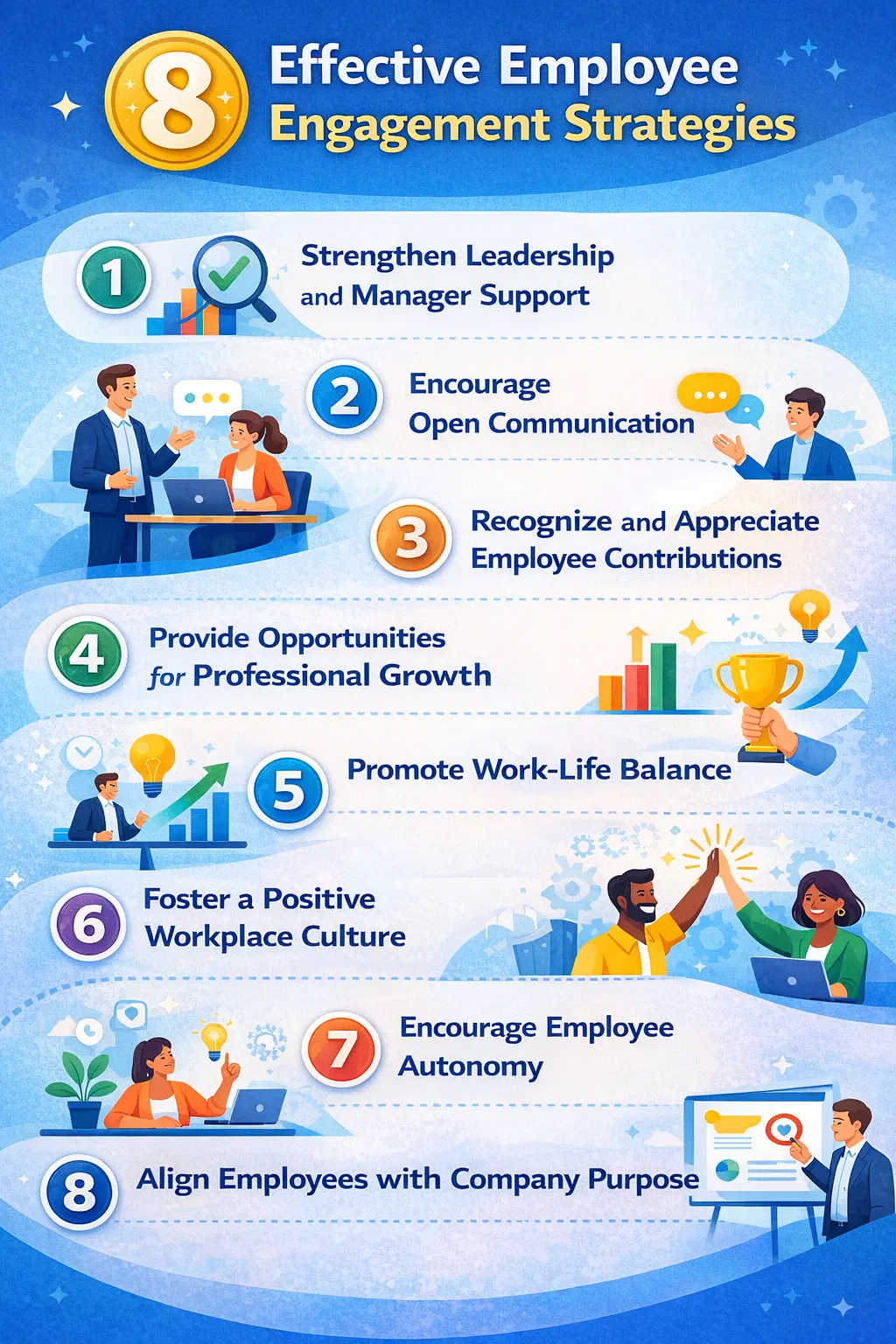
8 Effective Employee Engagement Strategies
1. Strengthen Leadership and Manager Support
Managers play a critical role in shaping employee engagement. Employees who feel supported by their managers are more likely to remain motivated and committed to their work.
Organizations should invest in leadership development programs that help managers strengthen communication, coaching, and feedback skills. Regular one-on-one meetings also allow managers to better understand employee goals and challenges.
When managers provide guidance and encouragement, employees feel more confident and supported in their roles.
2. Encourage Open Communication
Transparent communication builds trust within organizations. Employees should feel comfortable sharing their ideas, feedback, and concerns.
Companies can encourage open communication through regular team meetings, feedback channels, and employee surveys. Leadership should also provide updates about company goals and decisions.
When employees feel informed and heard, they are more likely to stay engaged and aligned with the organization’s direction.
3. Recognize and Appreciate Employee Contributions
Recognition plays a significant role in improving employee engagement. Employees who receive appreciation for their work often feel more motivated and valued.
Recognition can take several forms, including public acknowledgment during meetings, peer recognition programs, and employee appreciation awards. Even simple gestures such as personalized thank-you messages can make a meaningful impact.
When organizations consistently recognize employee contributions, they foster a culture of appreciation and motivation.
4. Provide Opportunities for Professional Growth
Career growth is an important driver of employee engagement. Employees want to develop new skills and progress within their careers.
Organizations can support professional development through training programs, mentorship initiatives, and learning resources. Creating clear career paths also helps employees understand how they can grow within the company.
When employees see opportunities for advancement, they are more likely to remain committed to the organization.
5. Promote Work-Life Balance
Maintaining a healthy balance between work and personal life is essential for employee well-being. Employees who experience excessive workloads or stress may become disengaged over time.
Flexible work arrangements, remote work options, and supportive policies can help employees manage their responsibilities more effectively.
By promoting work-life balance, organizations demonstrate that they value employee well-being and long-term productivity.
6. Foster a Positive Workplace Culture
A positive workplace culture encourages collaboration, respect, and inclusivity. Employees who feel they belong within their teams are more likely to contribute actively and support their colleagues.
Organizations can strengthen workplace culture by promoting teamwork, celebrating achievements, and encouraging open dialogue. Creating a supportive and respectful environment helps employees feel comfortable sharing ideas and working together.
7. Encourage Employee Autonomy
Providing employees with a sense of ownership over their work can significantly improve engagement. When employees are trusted to make decisions and contribute ideas, they feel more invested in their responsibilities.
Empowering employees often encourages innovation and creativity within teams. Employees who feel trusted often take greater initiative and develop solutions that benefit the organization.
8. Align Employees with Company Purpose
Employees want to understand how their work contributes to the organization’s broader goals. Leaders should regularly communicate the company’s mission and explain how individual roles support that mission.
When employees see the impact of their work, they are more motivated to contribute their efforts and support organizational success.
How to Implement Employee Engagement Strategies
Implementing engagement initiatives requires a structured approach. Organizations should begin by assessing their current engagement levels and identifying areas that need improvement.
A simple framework for implementation includes the following steps:
- Conduct employee surveys to understand employee experiences and concerns.
- Identify the key factors affecting engagement within teams.
- Develop strategies that address employee needs and organizational goals.
- Train managers to support and lead engagement initiatives.
- Continuously monitor progress and refine strategies when necessary.
By following these steps, organizations can create sustainable engagement programs that deliver long-term results.
How to Measure Employee Engagement
Measuring employee engagement helps organizations evaluate the effectiveness of their strategies. Without measurement, it becomes difficult to determine whether engagement initiatives are producing meaningful results.
Common metrics used to measure engagement include employee satisfaction survey scores, retention rates, and productivity indicators. Organizations may also track employee participation in company initiatives and development programs.
Qualitative feedback is equally important. Conversations with employees, focus groups, and regular check-ins can provide valuable insights into employee experiences.
Combining data with employee feedback allows organizations to gain a clearer understanding of engagement levels and identify areas for improvement.
Frequently Asked Questions
What are the most effective employee engagement strategies?
Effective strategies typically include strong leadership support, open communication, employee recognition, career development opportunities, and a positive workplace culture. These elements help employees feel valued and connected to their work.
Why is employee engagement important for modern organizations?
Employee engagement improves productivity, strengthens workplace culture, and reduces employee turnover. Engaged employees are more motivated and contribute more effectively to organizational success.
How can companies improve employee engagement quickly?
Companies can improve engagement by recognizing employee achievements, improving communication, and providing opportunities for feedback and development.
How do organizations measure employee engagement?
Organizations typically measure engagement using employee surveys, retention data, productivity metrics, and feedback sessions to understand employee experiences and identify improvement opportunities.
Conclusion
Building a highly engaged workforce requires consistent effort and thoughtful leadership. Organizations that prioritize communication, recognition, professional growth, and employee well-being create environments where employees can thrive.
By implementing effective employee engagement strategies for modern workforce environments, companies can build stronger teams, increase productivity, and improve long-term business outcomes.
Engagement begins with listening to employees and creating a workplace culture that values collaboration, transparency, and continuous growth. Even small improvements in engagement can lead to significant positive changes for both employees and the organization.
Improve Employee Engagement in Your Organization
Building an engaged workforce requires the right strategy, leadership approach, and continuous feedback. If your organization is looking to improve motivation, retention, and overall employee performance, the right engagement framework can make a measurable difference.
Our experts help organizations design practical employee engagement programs that strengthen workplace culture, support leadership development, and create meaningful employee experiences.
Whether you want to improve communication, build stronger teams, or develop leadership capabilities, a structured engagement strategy can help your organization move forward with confidence.
Ready to strengthen engagement within your workforce?
Explore our employee engagement training solutions or connect with our team today to discuss how we can support your organization’s growth.